
How to Optimize for Voice Search in 2026 AEO Tactics
September 2, 2026
Category:
Uncategorized
To optimize for voice search in 2026 you must focus on Answer Engine Optimization (AEO) rather than traditional keyword targeting. Use natural language, structure content for direct answers under 40 words, and implement FAQPage schema. Align your strategy with generative engine behaviors by prioritizing user intent clarity and technical site speed above all else. As search interfaces shift toward conversational AI assistants and smart speakers, the mechanics of visibility change fundamentally. You are no longer competing just for a click but for placement within an automated response. Success requires precise content structuring that anticipates spoken queries. This guide covers the specific AEO tactics agencies and marketers need to implement right now.
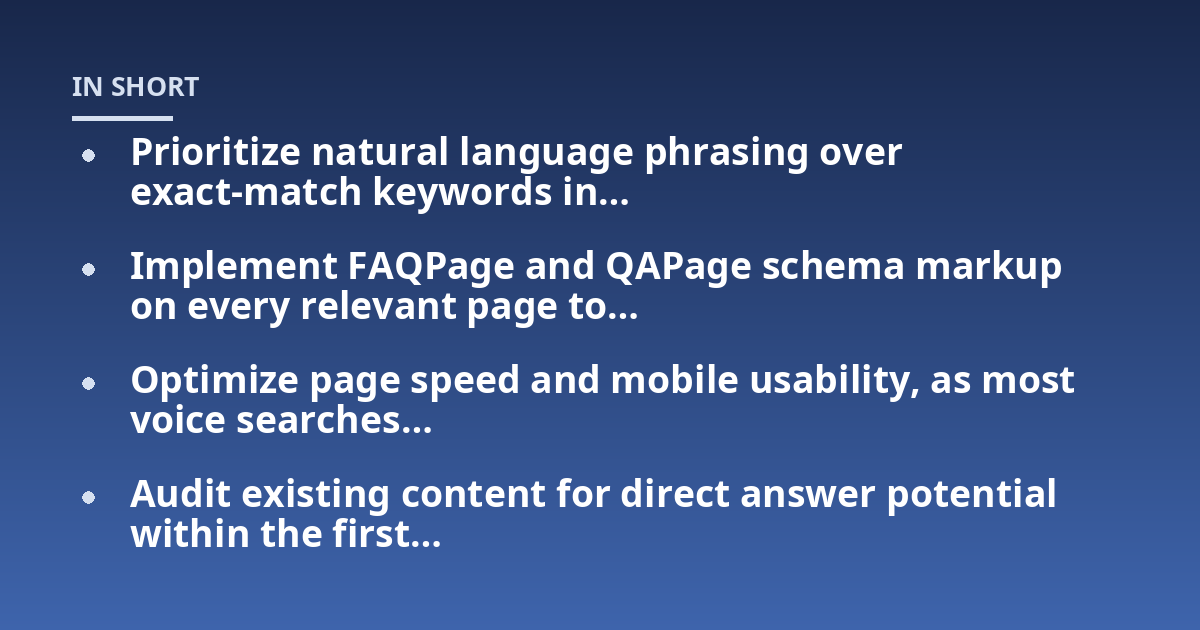
- Prioritize natural language phrasing over exact-match keywords in your content strategy.
- Implement FAQPage and QAPage schema markup on every relevant page to signal answer contexts.
- Optimize page speed and mobile usability, as most voice searches occur on handheld devices.
- Audit existing content for direct answer potential within the first 100 words of each section.
Why Answer Engine Optimization Matters Now
Answer Engine Optimization addresses a shift in how users interact with information systems. Voice queries differ significantly from typed searches because they are typically longer, more conversational, and often contain local intent markers. People do not speak into their devices using fragmented keywords; they ask complete questions that mimic real-world dialogue. This linguistic shift forces algorithms to prioritize direct, comprehensive answers over pages loaded with keyword density. A successful AEO strategy requires you to rewrite content specifically for spoken comprehension. You must structure information so it can be easily parsed by automated systems that generate audio or text responses for users. Traditional SEO metrics like click-through rates remain important but they do not tell the whole story when a voice assistant reads your content aloud without requiring a visit to your site.
The Shift in User Intent
Voice search usage continues to grow across smart speakers and mobile assistants. Users expect immediate, factual responses rather than lists of potential matches. When someone asks a question out loud they want the answer immediately. Content that fails to provide this direct response gets bypassed by the engine in favor of sources that do. This dynamic rewards brands that prioritize clarity and brevity over dense marketing language.
How to Structure Content for Direct Answers
The most effective way to secure visibility in voice results is to answer questions directly at the start of sections. Algorithms scan content for patterns that match user queries, so providing a clear thesis statement early on is critical. You should aim to place your primary answer within the first 40 words of any section addressing a specific question. This increases the likelihood of being selected for featured snippets and voice responses because the system can extract the relevant data quickly without scanning the entire page. Structure your content around natural language queries rather than isolated keywords. Use complete sentences that mirror how people speak when asking questions. This means avoiding jargon, overly complex sentence structures, and passive voice whenever possible. When you write for human comprehension first, automated systems can parse your text more accurately.
Most guides overcomplicate content structure. The reality is simpler: identify the top five questions your audience asks, answer them directly in the first paragraph of each section, and support that answer with supporting details later in the text.
The Importance of Conversational Phrasing
Conversational phrasing goes beyond just using simple words. It involves understanding the context behind the query. Users often use filler words like “how,” “what,” or “where” at the beginning of their sentences. By incorporating these natural question starters into your headings and body text, you align your content with the way people actually search. This alignment helps algorithms recognize your page as a relevant source for both typed and spoken queries.
Technical Requirements for Voice Search Success
Technical performance plays a crucial role in how well your site serves voice searches. Most voice queries originate from mobile devices where users expect instant results. If your site loads slowly or has poor mobile usability, search engines are less likely to surface your content for these high-speed interactions. You must prioritize Core Web Vitals metrics, specifically Largest Contentful Paint and Cumulative Layout Shift, to ensure a fast and stable experience. Structured data is equally important for voice optimization. It helps search engines understand the context of your content and distinguishes between different types of information on your page. Implementing FAQPage schema allows engines to identify specific questions and answers directly from your code. This structured format makes it easier for automated systems to pull accurate responses for voice devices without ambiguity.
Local SEO and Voice Queries
Local intent is another major factor in voice search behavior. Many voice queries include phrases like “near me” or specify a location. Optimizing for local search involves maintaining accurate business information, managing online reviews, and ensuring consistent citations across directories. When users ask for recommendations, search engines rely heavily on this localized data to provide relevant results.
The Role of Generative Engine Optimization
Generative Engine Optimization focuses on optimizing content for AI-powered tools that summarize or generate responses using multiple sources. Unlike traditional search which often highlights a single result, generative engines pull information from various points across the web. This means your content needs to be highly authoritative and well-cited to be included in these synthesized answers. You can increase your chances of being cited by providing unique insights, citing authoritative sources, and creating high-quality, comprehensive content. Focus on establishing your brand as a reliable source of information within your niche. When AI models evaluate your page for inclusion they look for clear expertise and trust signals. How to Build a Multilingual SEO Strategy with AI in 2026 explores how to apply these optimization principles across different language markets, ensuring global visibility as voice search technology advances.
Auditing Your Content for AEO Readiness
Regular audits are essential to maintain AEO readiness. Review your existing content to identify gaps where direct answers are missing or unclear. Look for sections that rely heavily on keyword stuffing rather than natural language. Update these pages to provide clearer, more concise responses to common questions within your industry. Prioritize high-traffic pages that receive significant organic queries. These pages represent the biggest opportunity for AEO improvements because they already attract users. By enhancing their answer clarity you can significantly boost their performance in both traditional search and voice-based interfaces.
Tracking Voice Search Performance
Monitoring how your content performs across different channels helps refine your strategy. Use analytics tools to track user behavior on mobile devices, specifically focusing on queries that indicate voice intent. Analyze which pages generate the most featured snippets or direct answers, and replicate those success patterns in your other content. This data-driven approach allows you to continuously improve your AEO tactics based on real user interactions. How to Automate WordPress SEO with AI Tools demonstrates how to streamline these audits and implementation steps using automated workflows, saving time while maintaining high-quality standards for both human readers and AI systems.
Avoiding Common Mistakes in Voice Optimization
Many marketers make the mistake of simply copying their written content into voice-friendly formats without making necessary adjustments. This approach fails because spoken language is fundamentally different from written text. You must rewrite content specifically to accommodate the limitations and expectations of voice interfaces. Another common error is neglecting technical aspects like schema markup. Without proper structured data, search engines struggle to understand the context of your answers, reducing their chances of being featured in voice results. failing to optimize for mobile performance can severely limit your visibility since most voice searches occur on handheld devices.
Over-Reliance on Exact Match Keywords
Exact match keywords are less effective in voice search because users rarely speak them verbatim. Relying too heavily on these terms can lead to content that sounds robotic and unnatural. Instead, focus on semantic relevance and natural language patterns that match user intent. This shift ensures your content resonates with both human readers and automated systems.
Future Trends in AEO
The landscape of voice search continues to evolve rapidly with advancements in artificial intelligence. Emerging trends suggest a greater emphasis on hyper-personalized responses based on user history and preferences. Search engines are also integrating more multimodal capabilities, allowing users to combine voice, text, and visual inputs for richer interactions. Staying ahead of these trends requires continuous learning and adaptation. Regularly update your AEO strategies to align with new algorithm updates and user behaviors. By anticipating these shifts you can maintain a competitive edge in the ever-changing digital ecosystem.
Implementing Your Strategy
Start by conducting a comprehensive audit of your current content landscape, identifying areas that need improvement for both traditional SEO and AEO requirements. Focus on restructuring high-priority pages to include direct answers within the first 40 words, implementing robust schema markup, and optimizing for mobile performance. Then, develop a testing plan to measure the impact of these changes over time using analytics tools designed to track voice search interactions. Structured Data for AI Overviews: Schema Types That Drive Clicks provides specific guidance on implementing technical elements that enhance your content’s visibility within AI-driven results and voice assistants, ensuring you are prepared for the next generation of search interfaces.
The Bottom Line
Optimizing for voice search in 2026 is less about keyword rankings and more about providing clear, direct answers that automated systems can easily parse. By focusing on natural language, technical performance, and structured data, you align your content with the way users interact with modern search interfaces. Implementing these AEO tactics will help you stay visible and relevant as search technology continues to evolve. If you need assistance navigating the complexities of AI-driven optimization and content automation for your agency or brand, reach out to our team today to schedule a consultation on your customized optimization plan.
Other posts from the category
There are no posts for the selected category.

Latest posts from the category
-

What makes an effective Category Page for AI
June 5, 2026
-

What Influences the cost of AI Optimisation
June 1, 2026
-

Organisation Schema: how to help AI understand your brand
May 27, 2026