
AIO and GEO for SaaS companies: how to appear in AI answers when buyers compare services

February 9, 2026
Category:
AI Marketing
When users evaluate SaaS solutions, they increasingly start not with search results but with a conversation with an assistant: asking for tool comparisons, checking compliance with requirements, clarifying limitations, and assessing risks. For your product to appear in these recommendations, AI needs to “assemble” your brand from accurate facts, clear structure, and relevant local EU context. That’s where an AIO audit combined with a geographic strategy comes in.
Why SaaS choices increasingly happen “inside” AI answers
SaaS purchases are rarely impulsive – decisions are criteria-driven. Generative systems are particularly good at responding to these criteria-based queries, which is why they increasingly shape your sales pipeline.
Typical decision-stage queries include:
- use cases: “which service fits…”, “how to handle process…”
- feature-based queries: “does it support…”, “is there…”, “how does it work…”
- comparisons: “X vs Y”, “alternatives”, “what’s best for a team in the EU”
If AI can’t find a clear answer from you, it pulls from other sources or infers indirectly – and your product drops off the shortlist.
What AIO and GEO specifically bring to SaaS businesses
AIO isn’t “AI versus SEO”; it’s about structuring content and data so models interpret your product accurately without distorting claims. At Tsoden, this begins with assessing how well AI already “understands your brand” (AI rating) and identifying where misinterpretations occur.
GEO focuses on managing where and how your brand is cited in generative systems, aligned with specific markets and languages. Tsoden defines GEO as analysing which materials surface in AI answers and continuously refining strategy to maintain stable visibility in generative search.
For SaaS in the EU, this is especially critical: languages, terminology, expectations, and regulations differ, and a single generic English landing page rarely becomes the source for local AI answers.
Which pages typically “feed” AI answers when SaaS is being evaluated
Below is a practical focus that often delivers strong results without rewriting the entire website.
1) Product pages that read like specifications, not advertising
To strengthen AI visibility, product pages should provide easily extractable answers:
- what it is and who it’s for (one concise paragraph, no metaphors)
- key limitations and conditions (be honest about where it’s not suitable)
- feature lists structured around real tasks, not marketing checklists
- security/compliance/data handling presented clearly in a dedicated section
- integrations and compatibility: what works, what doesn’t, and any caveats
This is applied AI content structure: enabling models to quote facts rather than guess.
2) Use cases and industry scenarios
Queries framed as “we need this for X” are often the starting point in SaaS selection. A strong use-case page should clarify:
- what problem is solved and what success looks like
- how implementation works in practical steps (without overpromising timelines)
- limitations and preparation requirements
- which teams or roles benefit most
3) Comparison pages and alternatives – without negativity
If you don’t explain how you differ, AI will do it for you – possibly incorrectly. A balanced approach includes:
- criteria-based comparisons (features, integrations, access control, support, limitations)
- “when to choose us” vs “when another solution may fit better”
- links to primary sources within your site (docs, policies, FAQs)
4) FAQs as an AEO tool, not a token section
AI FAQ optimisation has a strong influence on commercial SaaS answers: pricing/terms, security, limitations, integrations, data migration, support. The key rule is simple: one question – one concise answer, followed by detail. This reduces hallucination risk and improves citation accuracy.
GEO for SaaS in the EU: what a real local strategy means
GEO isn’t just interface translation. For generative systems, locality means contextual relevance and trusted sources. An effective EU AI strategy usually includes:
- priority countries and languages (where you genuinely sell or support customers)
- local phrasing of selection criteria (which varies even between neighbouring markets)
- consistent messaging across your site and external platforms to avoid contradictions
- market-specific sections on support, legal considerations, and data handling in the relevant language
Tsoden emphasises that EU scaling should begin with an AIO audit and unified standards for structure and localisation, followed by ongoing monitoring rather than broad, reactive content changes.
How Tsoden helps SaaS brands appear in AI answers
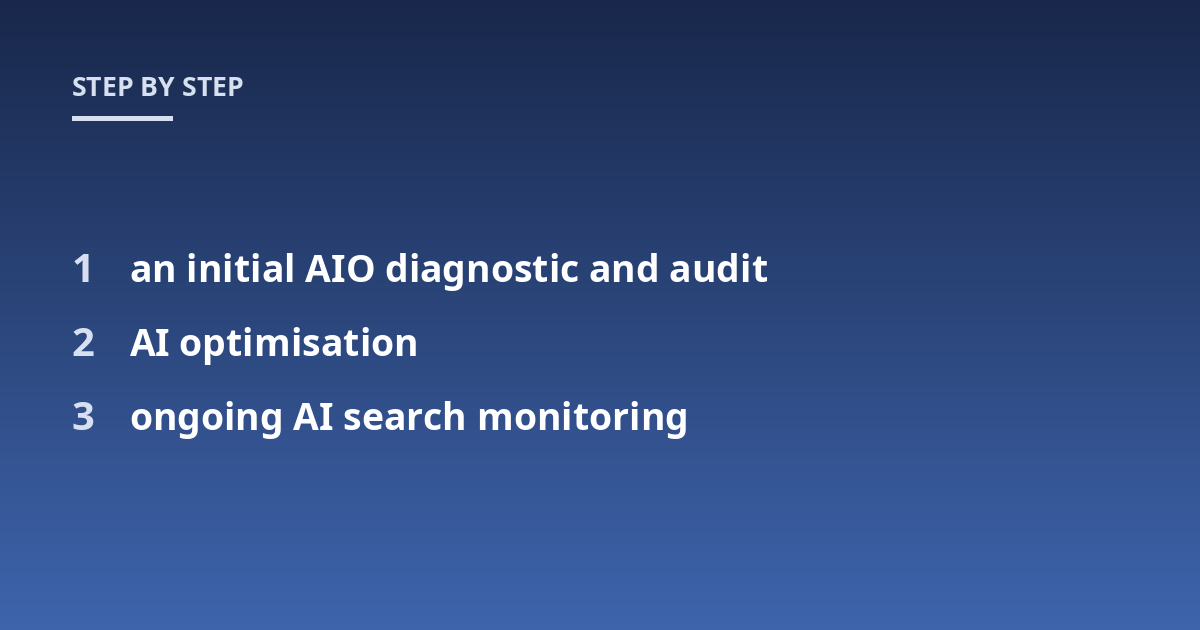
In practice, this typically involves:
- an initial AIO diagnostic and audit: how AI currently describes the product, where facts are misinterpreted, which pages surface and which are overlooked;
- AI optimisation: refining structure, semantic blocks, and data so content becomes a reliable answer source;
- ongoing AI search monitoring: regularly checking brand interpretation accuracy and adjusting strategy accordingly.
Compile your key use cases, the feature criteria you’re commonly compared on, and typical pre-sales or security questions – these form the core queries AI uses to generate SaaS recommendations. Then review whether your product pages, use-case content, comparison sections, and FAQs can be quoted without guesswork: are there concise answers, clear limitations, transparent conditions, and a logical structure? The next step is an AIO audit focused on EU markets, followed by a defined geographic strategy and continuous AI monitoring to ensure answers remain accurate as your product and content evolve.
Other posts from the category
-

What makes an effective Category Page for AI
June 5, 2026
-

What Influences the cost of AI Optimisation
June 1, 2026
-

Organisation Schema: how to help AI understand your brand
May 27, 2026

Latest posts from the category
-
What makes an effective Category Page for AI
June 5, 2026
-
What Influences the cost of AI Optimisation
June 1, 2026
-
Organisation Schema: how to help AI understand your brand
May 27, 2026