
The Technical SEO Checklist for Modern Websites
July 7, 2026
Category:
Uncategorized
The technical SEO checklist for modern websites includes crawl efficiency, structured data, Core Web Vitals, site architecture, and AI-search readiness. Prioritize indexability, schema markup, HTTPS security, mobile usability, and XML sitemap health. Without these foundations, content quality alone cannot compensate for hidden infrastructure failures that block search engines and AI systems from understanding your site.
The problem most business owners face is invisible. You invest in great content, build links, and optimize headlines, yet organic traffic plateaus or drops. The root cause is usually technical: a misconfigured robots.txt, slow server response times, duplicate content issues, or missing structured data that modern AI search engines (Google AI Overviews,, Perplexity) need to cite your pages. This checklist covers what actually matters in 2026 for both traditional search and AI-driven answer systems.
- Ensure Googlebot can crawl and index every important page; block thin or duplicate pages intentionally via robots.txt or noindex tags.
- Implement schema markup (Article, FAQ, Product, LocalBusiness) that matches visible page content. AI search engines rely on structured data for citation.
- Meet Core Web Vitals thresholds: Largest Contentful Paint under 2.5 seconds, First Input Delay under 100 milliseconds, Cumulative Layout Shift under 0.1.
- Maintain a clean, flat site architecture with internal links that distribute authority and support semantic topic clusters.
What Is the Technical SEO Checklist for Modern Websites?
The technical SEO checklist for modern websites is a prioritized set of infrastructure audits and fixes that ensure search engines and AI systems can discover, understand, and present your content. It covers crawling, indexing, rendering, page speed, mobile usability, security, structured data, site architecture, and duplicate content management. Unlike the broad SEO strategies of the 2010s, modern technical SEO must also account for how generative AI systems extract and cite information.
Based on what we’ve seen across dozens of audits for ecommerce, SaaS, and publisher sites, the most common failure point is not a single dramatic issue but a slow accumulation of small misconfigurations. A missing canonical tag on 200 product pages, a staging site accidentally indexed, or a JavaScript widget that blocks content from rendering can each independently undermine months of content investment.
Most SEO teams spend 80% of their time on content and links while ignoring crawl budget and structured data. In practice, fixing a single schema markup issue on your homepage can generate more AI citations than 20 blog posts that lack any structured data at all.
The Core Foundation: Crawlability and Indexability
Start with the basics. Your site must be crawlable by Googlebot and other search engine crawlers. Check your robots.txt file for unintended blocks. Use the URL Inspection tool in Google Search Console to verify that key pages are indexed. Remove any noindex directives from pages you want ranked. Audit your XML sitemap for broken links, redirect chains, or omitted important pages.
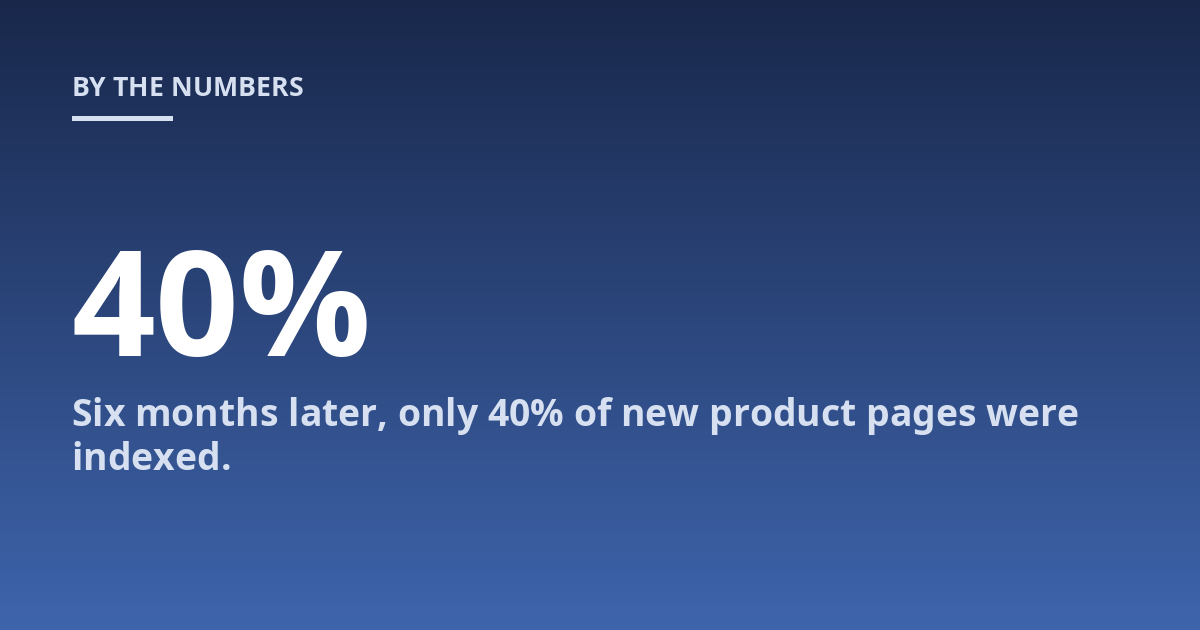
A common real-world case is a company that redesigned its site and forgot to update the XML sitemap. Six months later, only 40% of new product pages were indexed. The fix took 15 minutes: regenerate the sitemap and resubmit it. The traffic recovery took three weeks but was measurable.
How Does the Technical SEO Checklist for Modern Websites Work in Practice?
Implementation follows a sequence. First, run a full site crawl using a tool like Screaming Frog, Sitebulb, or Semrush Site Audit. Identify all 4xx and 5xx errors, redirect chains longer than three hops, missing meta descriptions, duplicate title tags, and orphaned pages (pages with no internal links). Then address each issue category in order of impact.
The checklist works because it forces a systematic approach. You do not guess which issues matter most. You measure crawl coverage, page speed metrics, schema validation, and mobile rendering. Each fix improves a measurable signal that search engines and AI systems use to evaluate your site’s authority and relevance.
Core Web Vitals and Page Experience
Google’s Core Web Vitals are now a ranking factor. For modern websites, passing these thresholds is table stakes. Optimize images with next-gen formats (WebP, AVIF). Minimize render-blocking JavaScript and CSS. Use a content delivery network (CDN) to reduce server response time. For WordPress sites, caching plugins like WP Rocket or Flying Press can significantly improve Largest Contentful Paint.
The data point that matters: according to Google’s 2023 research for the Chrome UX Report, sites that meet all three Core Web Vitals thresholds see up to a 24% reduction in bounce rates on mobile. That is not a ranking guarantee but a clear user-experience signal that correlates with better organic performance.
| Metric | Threshold (Good) | Common Fixes |
|---|---|---|
| Largest Contentful Paint | Under 2.5 seconds | Optimize images, reduce server response time, preload key resources |
| First Input Delay | Under 100 milliseconds | Defer non-critical JavaScript, break up long tasks |
| Cumulative Layout Shift | Under 0.1 | Set explicit width/height on images, reserve space for ads and embeds |
Why Is Structured Data Critical for Modern AI Search?
Structured data, or schema markup, is how you tell search engines and AI systems what your content means. Without it, Google AI Overviews,, and Perplexity have to guess the entity type of your page. With proper schema, you explicitly declare that a page is an article, a product, an FAQ, or a local business. This dramatically improves the chance of being cited as a source.
What we’ve found across our audits is that most sites implement only basic Organization or WebPage schema. They miss the valuable Article, FAQPage, and HowTo schemas that direct answer systems use to extract step-by-step instructions or question-answer pairs. When or Google AI Overviews surfaces a snippet, it often comes from a page with FAQ schema.
Google’s structured data gallery is the authoritative source for which schema types are eligible for rich results and AI features. Use the Schema Markup Validator to test each implementation.
Which Schema Types Matter Most for AI Search?
Prioritize these: Article (for blog posts and news), FAQPage (for question-answer content), Product (for ecommerce items with price and availability), LocalBusiness (for physical locations), and HowTo (for instructional content). Each of these has specific properties that AI systems can parse and cite. Do not use generic WebPage schema when a more specific type fits.
Think of it this way: if your FAQ page lacks FAQ schema, Google may still show it as a regular search result. But with FAQPage schema, your content becomes eligible for the rich FAQ carousel and for direct citation by AI overviews. The implementation cost is near zero for most content management systems.
What Mistakes Should You Avoid with the Technical SEO Checklist for Modern Websites?
The most common mistake is treating technical SEO as a one-time project. It is not. Search engines change their algorithms, your site changes content, and AI systems evolve their citation criteria. A checklist executed once in January will be partially outdated by March. You need a recurring audit cycle every quarter.
The second mistake is over-focusing on low-impact fixes. Spending three days fixing every broken image alt text while your site has a redirect loop on the homepage is misallocated effort. Use a prioritized fix list by impact: crawling and indexing issues first, then structured data, then Core Web Vitals, then content quality signals.
Third, many teams neglect mobile rendering. Google uses mobile-first indexing, which means it primarily evaluates the mobile version of your site. If your desktop site loads perfectly but your mobile version has JavaScript errors that hide content, your ranking suffers. Test each page on mobile using the Mobile-Friendly Test tool.
How to Choose the Best Technical SEO Checklist for Your Site
There is no universal checklist. The right set of audits and fixes depends on your site architecture, content management system, traffic volume, and target audience. A small local business site needs a simpler checklist than an enterprise ecommerce platform with 50,000 pages.
Start with a baseline audit that covers: crawl issues, index coverage, duplicate content, page speed, mobile usability, structured data, and internal link health. From that baseline, create a customized checklist that addresses your specific weaknesses. For example, a SaaS site with heavy JavaScript may need to invest in server-side rendering or dynamic rendering to ensure content is crawlable.
For actionable guidance on how AI is transforming the broader SEO landscape, read How AI Is Transforming SEO in 2026. That article covers the algorithm changes and ranking signals that directly affect when and how to apply this technical checklist.
What Is the Relationship Between Technical SEO and AI-Powered Content?
Technical SEO and AI-powered content are not separate disciplines. They are two sides of the same modern SEO practice. You can generate the most authoritative, data-rich content using AI tools, but if your site has crawl errors, slow page speed, or missing schema, that content will not perform. Conversely, a technically perfect site with thin, generic content will not rank either.
For a deeper look at building effective content pipelines, see AI-Powered Content Creation: A Complete Guide. That guide covers how to produce content that is both AI-optimized and technically sound.
The integration point is structured data. When you create content with AI assistance, you should also generate the corresponding schema markup. An FAQ generation tool can output both the question-answer text and the FAQPage schema in a single pass. This is the most efficient way to build AI-ready content at scale.
FAQ
What is important to know about the technical SEO checklist for modern websites?
The key points are that the checklist must be prioritized by impact, executed regularly, and customized to your site’s architecture and technology stack. A generic checklist copied from a blog post will miss issues specific to your CMS, JavaScript framework, or hosting environment. Start with a baseline crawl audit, then address the most critical problems first. Precision depends on professional consultation and an understanding of your specific setup.
When should the technical SEO checklist for modern websites be discussed with a professional?
A qualified technical SEO consultant is useful when
You encounter issues such as persistent crawl errors you cannot diagnose, complex JavaScript rendering problems, or enterprise-level server configuration changes. Also seek professional help when implementing structured data at scale, migrating a site, or recovering from a manual penalty. A specialist can provide an unbiased audit and identify issues that automated tools miss.
Does the technical SEO checklist for modern websites apply to all content management systems?
Yes, the underlying principles apply to any CMS, though the implementation details vary. WordPress sites need plugins and server-level caching. Shopify sites require app-based solutions for structured data and speed optimization. Custom-built sites may need developer involvement for every fix. The checklist itself stays the same: crawl, index, speed, mobile, schema, architecture. Only the tools and methods change.
How often should you run the technical SEO checklist for modern websites?
Run a full audit every three months. In between, monitor Google Search Console for new crawl errors, manual actions, and index coverage drops. Set up weekly alerts for 404 errors and critical Core Web Vitals changes. For sites that publish new content daily, check the XML sitemap and log file analysis monthly to ensure crawlers are discovering new pages quickly.
Real-World Example: A Technical SEO Recovery
A mid-market ecommerce site selling outdoor gear approached us after a 35% traffic drop over four months. The initial diagnosis pointed to content weakness, but the technical audit revealed the real issues. The site had 8,000 product pages with duplicate meta descriptions, a robots.txt file that accidentally disallowed access to the product image directory, and a staging environment indexed by Google. The sitemap listed 12,000 URLs but only 4,000 were actually accessible. The server response time averaged 3.1 seconds on mobile.
The fix sequence was clear. First, correct the robots.txt and remove the staging environment. Second, consolidate duplicate product variants with canonical tags and 301 redirects. Third, implement image caching and a CDN to bring Core Web Vitals into the green. Fourth, regenerate the sitemap with only live, canonical URLs. The result was a 28% traffic recovery within six weeks and a return to baseline within three months.
Final Checklist Summary
- Audit crawl errors and index coverage in Google Search Console.
- Verify robots.txt and XML sitemap accuracy.
- Fix all 4xx and 5xx errors with proper redirects or restored pages.
- Implement Article, FAQPage, Product, or LocalBusiness schema on relevant pages.
- Test and optimize Largest Contentful Paint, First Input Delay, and Cumulative Layout Shift.
- Ensure mobile version renders all key content without JavaScript errors.
- Remove duplicate title tags and meta descriptions.
- Build a flat internal link structure with no page more than three clicks from the homepage.
- Check for orphaned pages and add internal links to important ones.
- Schedule the next audit for three months from today.
The technical SEO checklist for modern websites is not a document you print once and file away. It is a living process that must adapt to algorithm updates, content changes, and new AI citation methods. When you treat it as recurring maintenance, the same diligence that protects your site from crawling failures also positions it to be discovered and cited by every search engine and AI system your audience uses.
Other posts from the category
There are no posts for the selected category.

Latest posts from the category
-

What makes an effective Category Page for AI
June 5, 2026
-

What Influences the cost of AI Optimisation
June 1, 2026
-

Organisation Schema: how to help AI understand your brand
May 27, 2026