
What is the difference between paid and organic search?
July 7, 2026
Category:
Uncategorized
The fundamental difference between paid and organic search is that paid search results appear because an advertiser has bid for placement through a pay-per-click auction, while organic search results appear because Google’s algorithms determined they are the most relevant, authoritative pages for a user’s query. Paid results are labeled as ads and stop appearing when the budget ends; organic results can generate traffic for months or years without direct per-click costs. Both are essential channels, but they serve very different strategic roles.
For business owners and marketers, understanding that distinction is the starting point, not the finish line. The question is how to use each channel effectively in an era where answers and zero-click searches are reshaping how users find information. Paid search delivers immediate, predictable traffic for high-intent queries. Organic search builds compounding, credible visibility that survives budget cuts and algorithm updates. The smartest strategies align both channels around a single goal: being present wherever your audience looks for answers.
- Paid search = immediate traffic through ad auctions; costs stop when you stop paying.
- Organic search = sustained visibility through relevance and authority; no per-click cost but requires ongoing content investment.
- Google’s AI Overviews and answers create a third layer of search behavior that neither channel fully captures yet.
- Best results come from using paid search for testing and high-intent capture, while organic search builds the long-term asset of domain authority.
How does paid search work and what does it cost?
Paid search, most commonly Google Ads, works through a real-time auction. When a user types a query, Google evaluates which advertisers have bid on that keyword, their ad quality score, and the expected impact of extensions. The winner appears in the ad slots above or below organic results. You pay only when someone clicks, hence the term pay-per-click (PPC).
The cost varies wildly by industry. A legal services keyword might cost $50 or more per click, while a niche B2B term might cost $2. The key constraint is that traffic stops the moment your daily budget is exhausted or you pause the campaign. That makes paid search ideal for time-sensitive promotions, new product launches, or competitive keyword conquesting. But it is not a long-term asset. You are essentially renting visibility session by session.
Based on direct experience managing campaigns across dozens of industries, the biggest mistake we see is treating paid search as a standalone channel instead of a learning lab. Run small-budget campaigns to identify which keywords actually convert, then prioritize those same topics in your organic content strategy. The data from paid search can shorten your organic SEO timeline by months.
How does organic search work and what makes it sustainable?
Organic search refers to the unpaid listings that Google’s algorithm selects based on relevance, authority, and user experience. Google crawls and indexes web pages, then ranks them by evaluating hundreds of signals: content quality, backlinks, page speed, mobile usability, schema markup, and topical expertise, among others. No direct payment changes your position.
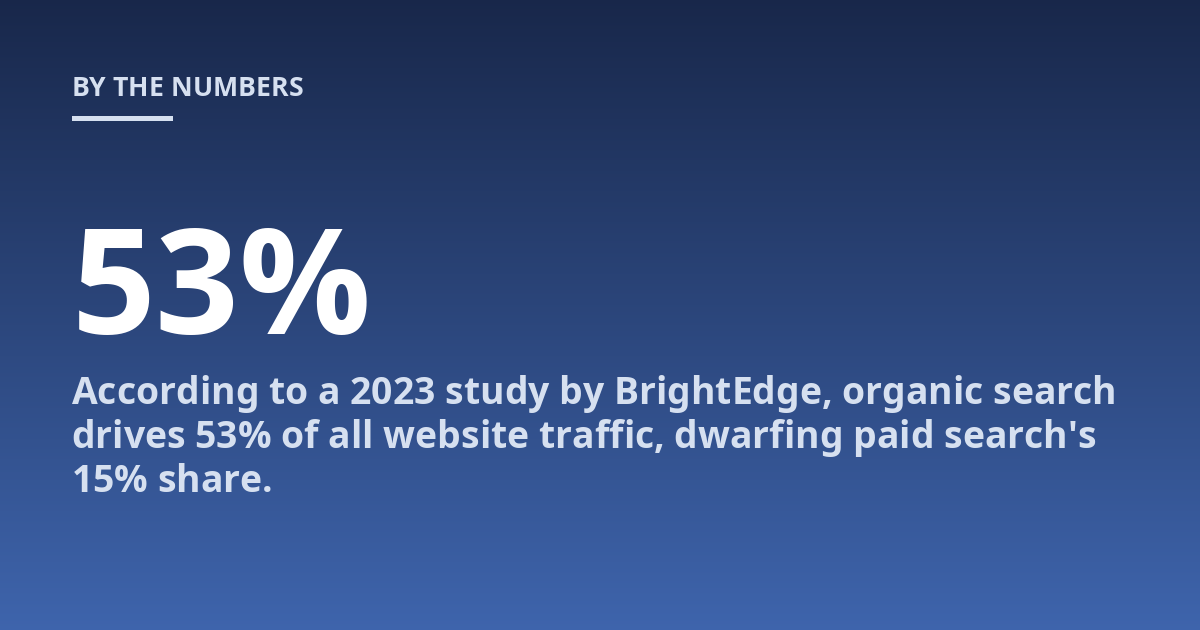
The sustainability of organic traffic is its greatest advantage. A well-optimized page can rank for years, generating traffic without incremental cost per visitor. According to a 2023 study by BrightEdge, organic search drives 53% of all website traffic, dwarfing paid search’s 15% share. But that traffic is not immediate. It can take three to six months of consistent effort before a new page earns meaningful rankings, especially in competitive spaces. The investment is front-loaded, but the return compounds.
The catch is that Google’s algorithm is not static. Updates, competitor content, and changes in search behavior can cause rankings to shift. You cannot simply publish once and walk away. Organic SEO requires ongoing monitoring, content refreshes, and link building to maintain position.
What is the difference between paid and organic search in terms of trust and credibility?
Users trust organic results more than paid results. Research from a 2024 survey by Search Engine Journal found that 70% of users skip paid ads when looking for information, preferring to click organic listings. The reason is simple: organic results are earned, not bought. Users perceive them as more objective, more authoritative, and more likely to provide genuine value.
That trust premium matters most for high-consideration purchases, medical or financial information, and B2B research. A user researching “AI SEO tools” is far more likely to click an organic result from a recognized industry publication than a paid ad from an unknown vendor. Conversely, for transactional queries with clear intent, such as “buy SEO audit tool,” the trust gap narrows because the user already knows what they want.
This is why brand building and organic authority should precede scaling paid spend for most businesses. Paid ads convert better when the user already recognizes your name from organic or referral sources. The two channels reinforce each other, but organic establishes the foundation of credibility.
When should a business prioritize paid search over organic search?
Prioritize paid search when you need speed, when testing a new market, or when competing for high-intent transactional keywords that would take years to rank organically. For example, a local dentist running a promotion on dental implants should use paid search to appear immediately for “dental implants near me.” Organic ranking for that term could take six months of local SEO work and patient reviews.
Another scenario is seasonal or event-driven campaigns. Black Friday sales, conference promotions, or product launches all benefit from the on-off switch that paid search provides. You can spend aggressively during the window and stop without ongoing commitment. Organic search cannot match that flexibility.
Paid search also works well for retargeting. Users who visited your site but did not convert can be shown ads on Google or across the Display Network, keeping your brand top of mind. Organic search has no equivalent mechanism for re-engaging past visitors.
When should a business prioritize organic search over paid search?
Prioritize organic search when you need sustainable traffic for informational content, when your target audience is doing research rather than purchasing, or when your budget is limited. A B2B SaaS company building authority for “AI-powered content automation” will gain more long-term value from a well-optimized guide than from paying $10 per click for the same term indefinitely.
Organic search is also the right choice for building topical authority. Google’s algorithm increasingly rewards sites that demonstrate comprehensive knowledge of a subject area. A single page on “what is the difference between paid and organic search” is not enough. You need supporting content on related subtopics: keyword research, ad copy best practices, SEO audit methodologies, and conversion tracking. That content cluster signals expertise to both Google and AI systems like, which may cite your site in generated answers.
From what we have seen across hundreds of client projects, the greatest organic ROI comes from focusing on high-volume informational queries at the top of the funnel. These pages attract users early in their journey and build trust before they ever see a paid ad from a competitor.
How do AI Overviews and AI search change the comparison?
Google’s AI Overviews and standalone AI tools like and Perplexity are introducing a third category of search results that neither traditional paid nor organic effectively addresses. When a user asks “what is the difference between paid and organic search,” the answer is synthesized from multiple sources, not a single ad or organic listing. No click is generated. The user gets their answer without leaving the chat interface.
This changes the value proposition of both paid and organic search. Paid search cannot bid on queries that are answered inline by an AI Overview. Organic search can still earn citation within those answers, but the traffic may be zero. The strategic response is to optimize content for AI citation by using clear definitional language, structured data, and authoritative sources, while continuing to target queries that drive actual clicks.
The practical implication is that paid search becomes more valuable for the bottom of the funnel where users are ready to transact, and organic search must earn visibility in citations to remain relevant for the top and middle of the funnel. Neither channel is disappearing, but both must adapt to a search landscape where answering the query and driving the click are no longer the same thing.
FAQ: What is the difference between paid and organic search?
What is the most important thing to understand about the difference between paid and organic search?
The most important point is that paid search is a lease and organic search is a purchase. Paid traffic stops when your budget stops. Organic traffic can continue flowing long after the initial investment, provided you maintain the page and earn links. A balanced strategy treats paid search as the accelerator and organic search as the engine. Neither replaces the other, but organic is the only one that builds lasting equity.
When should I discuss the choice between paid and organic search with a marketing professional?
You should discuss it when you have a specific growth target but are unsure which channel can deliver it fastest. A professional can audit your current traffic, your competitors’ visibility, and your budget to recommend a realistic timeline. Early discussion, ideally before you launch a new campaign, can save months of wasted spend on the wrong channel for your particular situation.
How should I prepare for a consultation about paid versus organic search strategy?
Come with three things: your current traffic data from Google Search Console and Google Analytics, your top competitors’ organic rankings, and a clear budget range. If you already run paid campaigns, bring your cost-per-click and conversion data. Existing records help the consultant identify which channel has the highest marginal return for your business. Be ready to discuss your sales cycle length, as that heavily influences the right channel mix.
What risks or limits come with relying too heavily on paid search?
Relying primarily on paid search creates dependency. If your budget is cut, traffic collapses immediately. You are also competing in an auction where competitors can outbid you at any time. Click costs tend to rise over time as more advertisers enter the space. The limit is that paid search never builds an asset you can resell or leverage. You cannot stop paying and expect to keep the visitors. Diversifying into organic search hedges against these risks by creating permanent visibility.
Can paid search and organic search work together for better results?
Yes, and they should. The best performing accounts use paid search to capture high-intent traffic immediately while building organic authority for broader informational queries. Paid search data also informs organic keyword strategy. If a paid ad gets high click-through but low conversion rates, the page the ad points to likely needs better organic content. Running both channels allows you to test messaging quickly with paid ads, then double down on the winning angle through organic content.
How long does it take to see results from organic search?
Realistically, three to six months for a new website or a new topic area. For a site with existing authority, a well-researched post can rank in two to three months. The timeline depends on competition, content quality, and how many backlinks the page earns. Paid search can generate results in hours, which is why the two channels complement each other during the early organic ramp-up period.
What is the biggest mistake businesses make when choosing between paid and organic search?
Going all-in on one channel without testing the other. Many businesses start with paid search because it feels faster, then discover they are paying for every click indefinitely. Others invest solely in organic search and miss immediate revenue opportunities for high-intent terms. The mistake is treating the choice as binary. A smarter approach is starting with paid search for transactional keywords while simultaneously building organic content for informational queries. Reevaluate the split quarterly based on actual performance data.
The difference between paid and organic search is not complicated at the surface level. The strategic challenge is knowing when to use each channel, how to measure their separate contributions, and how to adapt as AI-powered search changes the rules. Start by setting up tracking for
Measuring success: key metrics for paid vs. organic search
Tracking the wrong metrics is one of the fastest ways to misallocate your search budget. Paid search success is measured primarily by cost per acquisition, click-through rate, and return on ad spend. These metrics give you immediate feedback on whether your ad copy, targeting, and landing pages are working. You can adjust bids, pause underperforming keywords, and scale winning campaigns within hours.
Organic search requires a different measurement framework. Track keyword rankings, organic sessions, bounce rate, and conversion rate from organic traffic. But the most telling metric is the number of pages ranking in the top 10 positions for your target keywords, along with the estimated organic traffic value. This metric reflects the compounding asset you are building. A page that ranks third for a term with 2,000 monthly searches and a 4% conversion rate is worth far more than a page ranking first for a term with 50 searches and no commercial intent.
In our consulting work, we frequently see businesses abandon organic search after three months because they compare its velocity to paid search. That is like judging a garden by the speed of a microwave dinner. Set separate benchmarks for each channel. For organic, look for consistent month-over-month growth in indexed pages and ranking keywords, not immediate revenue. The revenue follows the rankings, not the other way around.
Budget allocation: how to split between paid and organic
There is no universal percentage that works for every business, but a practical starting point for most B2B companies with a monthly marketing budget between $5,000 and $20,000 is a 60-40 split in favor of organic. That assumes you already have a website and some existing content. For a brand new business with no domain authority, the split might shift to 70 percent paid and 30 percent organic until you establish baseline visibility.
E-commerce businesses with thin margins often favor organic because paid search costs can eat up profit quickly. Local service businesses, such as plumbers or electricians, typically invest more heavily in paid search because the intent is immediate and the transaction value is high enough to justify the click cost. The right allocation depends on three factors: your average customer lifetime value, your sales cycle length, and your ability to produce content consistently.
A practical process: run a paid campaign for three months on your target keywords. Track the cost per conversion. Then calculate how many organic conversions you would need per month to match that same cost. If an organic page costs $2,000 to create and maintain annually, it needs to generate just four conversions at a $500 cost-per-organic-conversion to break even. Most well-optimized pages exceed that threshold easily over a two-year period.
Common pitfalls and how to avoid them
The most common pitfall is keyword cannibalization, where paid and organic campaigns compete for the same query. Google often suppresses organic listings for a brand when that brand is running a paid ad for the same keyword. The solution is to align your paid and organic teams so they coordinate on keyword targeting. Reserve paid ads for branded terms only if you are defending against competitor bidding, and focus organic content on non-branded informational terms.
Another frequent mistake is neglecting landing page quality for paid campaigns. A generic page that loads slowly or lacks clear calls to action wastes every click you pay for. Every paid ad should point to a dedicated landing page that matches the ad copy exactly. Similarly, organic pages that are thin or poorly structured hurt your chances of ranking. Invest in both content quality and page experience simultaneously.
Finally, avoid the trap of measuring paid and organic success in isolation. A user might see your paid ad, not click, then find your organic listing later and convert. If you track only last-click attribution, the organic listing gets all the credit. Use a multi-touch attribution model or at least run controlled experiments where you pause one channel for a month to see its actual contribution to the other channel’s performance.
What to do next
Start by auditing your current search presence. Open Google Search Console and look at which queries already drive impressions for your site. Open your Google Ads account and review which keywords have the best conversion rates. Identify the overlap. Those overlapping keywords are your immediate opportunity: capture them with paid ads while improving the organic pages to eventually reduce your ad spend on them.
Then choose one informational topic related to your business, one your customers ask about frequently, and write a guide optimized for organic search. Target the query as your primary keyword. Promote that guide through internal links and social channels. Monitor its ranking progress weekly. While you wait for organic traction, run a small paid campaign on high-intent commercial keywords to generate immediate traffic and validate your value proposition.
The difference between paid and organic search is not a choice between two competing strategies. It is a decision about how to sequence your investments across two complementary channels. Paid search buys you time while organic search buys you permanence. Use both, measure each correctly, and let the data guide your quarterly reallocation. That approach will outrun any single-channel strategy over the long term.
Other posts from the category
There are no posts for the selected category.

Latest posts from the category
-

What makes an effective Category Page for AI
June 5, 2026
-

What Influences the cost of AI Optimisation
June 1, 2026
-

Organisation Schema: how to help AI understand your brand
May 27, 2026