
How to Automate WordPress SEO with AI Tools: A Practitioner’s Blueprint
July 21, 2026
Category:
Uncategorized
Automating WordPress SEO with AI tools means integrating specialized artificial intelligence into your content and technical workflow, allowing you to generate optimized material, identify structural gaps, and maintain site health without constant manual effort. Effective automation shifts the marketer’s focus from repetitive execution to high-level strategy and audit.
True SEO automation doesn’t mean pushing a “set it and forget it” button; rather, it involves building interconnected workflows that guide content creation, enhance technical performance (like structured data implementation), and ensure consistent optimization across massive site inventories. As senior strategists, we’ve seen the shift from manual keyword mapping to AI-assisted clustering significantly cut down the time spent on initial research, letting teams concentrate on refining quality and user experience.
- Focus on Workflow Integration: Automation requires connecting diverse tools (AI writing suites, schema validators, CMS APIs) into a single operational process rather than using standalone apps.
- Prioritize Technical Depth: AI must automate more than just content creation; it needs to handle technical SEO elements like internal linking structures and structured data implementation within WordPress themes.
- Maintain Human Oversight: AI outputs are excellent starting points, but every piece of content requires human expert review for voice, accuracy, and E-E-A-T compliance before publication.
Understanding AI-Powered SEO Workflows
AI-Powered SEO is the process of leveraging machine learning models to perform tasks previously requiring intense manual effort, spanning everything from competitive analysis and topic clustering to drafting optimized copy. It doesn’t replace domain expertise; it amplifies it.
For instance, traditional content strategy involved hours spent using keyword research tools to find related queries. Now, specialized AI can ingest hundreds of search results and instantly generate comprehensive topic clusters or identify semantic gaps that a human might miss while researching in local markets like Berlin or Toronto.
To successfully automate your SEO process, you must first segment the workflow into discrete, measurable tasks: Content Generation, Technical Audit, Optimization/Mapping, and Monitoring. Each task requires a specific AI input and an appropriate WordPress integration point.
The most common mistake agency owners make when automating is using AI for the entire content lifecycle. A pragmatic approach involves letting AI handle the first draft (the skeleton) but requiring your team to spend 80% of their time on humanizing, refining the expert insight, and adding local color or case studies, which search engines value highly.
What to Automate First: Core WordPress SEO Tasks
When starting with automation, focus on tasks that are high-volume, repetitive, and technically complex. This approach yields the highest immediate ROI and minimizes technical debt.
Automating Content Creation: From Outline to Draft
The initial content phase benefits most from AI assistance. You should use generative models to create topic outlines based on identified keyword clusters and search intent. Crucially, these tools shouldn’t write full articles immediately; instead, they generate structured headings (H2s and H3s) and suggested sub-topics.
In practice, a robust workflow looks like this: 1) AI generates the outline based on the primary keyword cluster. 2) Your subject matter expert fills in key data points, local citations, or proprietary research. 3) A second AI pass refines the tone and expands sparse sections to hit optimal word counts.
Automating Technical SEO Auditing and Optimization
This is where automation saves the most time and requires integration beyond standard plugins. Modern WordPress themes must be configured to handle technical signals reliably. You should automate the checks for: Structured Data, internal linking patterns, and image alt-text generation.
For example, implementing Schema Markup, the code that tells search engines exactly what your content is (e.g., a review, an FAQ block, or a local business address), cannot be automated by simple text pasting. It needs to be applied programmatically using specialized tools integrated with the WordPress backend. Google Search Central provides detailed guidelines on these requirements.
Advanced Workflows for Enterprise Automation
Moving beyond basic content drafting, truly automating your SEO means treating WordPress as a data hub and utilizing APIs to manage complexity. This is the difference between using an AI writing tool and deploying a complete Content Operations system.
Implementing Scalable Multilingual Content Strategies
If your business serves diverse regions, manual optimization becomes impossible. Here’s where automation shines. You need tools that don’t just translate content but adapt it, performing locale-specific keyword research for German users in Munich or French users in Lyon, and adjusting cultural context. This requires linking AI generation to multilingual tools that manage Hreflang tags effectively. For detailed processes on this topic, consider reviewing Optimizing for AI Overviews: Key Schema Types to Improve Search Visibility.
Structured Data: The Key to AI Overviews
Schema markup remains the most powerful technical signal you can automate. It directly increases your eligibility for rich snippets and is critical for appearing in emerging answer engine formats. You need to identify which Schema types apply (e.g., LocalBusiness, HowTo, Review) and write workflows that automatically validate and insert this code on publish.
| Element | Manual Process | Automated Process (Via Plugin/API) | Benefit / Outcome |
|---|---|---|---|
| Image Alt Text | Describing every image by hand. | AI generates descriptive text based on surrounding content and file name conventions. | Improved accessibility and lower crawl-budget waste. |
| Internal Linking | Manually linking to 5-7 related posts per article. | Software maps topical clusters and suggests high-authority, contextually relevant internal links upon draft completion. | Boosted site authority and improved user journey mapping. |
| Structured Data (Schema) | Hard coding the JSON-LD block for every type of page. | CMS automatically detects content type (e.g., recipe, product review) and implements the correct Schema markup in the background. | High eligibility for rich results and answer panels. |
A full-scale automation blueprint moves beyond “copy this plugin.” It’s about systemizing your content audit process so that optimization becomes an invisible part of publishing.
What Mistakes Should You Avoid When Automating SEO?
The greatest threat in automated SEO is the illusion of perfection. Over-reliance on AI without professional auditing can lead to “SEO sludge”, content that sounds optimized but lacks genuine human experience and specific insight.
First, never automate fact-checking or data attribution. If your content cites a statistic about European market growth, that number must come from a named source, a government report, a recognized industry body, or a peer-reviewed study. Simply because an the text does not validate the claim. Secondly, resist the urge to keyword-stuff; sophisticated AI tools can sometimes over-optimize for keywords, resulting in unnatural, robotic prose that search engines penalize.
Think of the human editor as the ultimate quality gate. When an AI drafts a section, your job isn’t just to proofread grammar; it’s to inject three specific, non-obvious details (e.g., naming a local street, referencing a niche industry standard, or mentioning a regulatory body like GDPR) that prove human expertise and lived experience.
In my years working with agencies across various sectors, what we’ve consistently found is that clients fail when they treat automation as “magic bullet” solution. It’s fundamentally a process management tool, not an inherent ranking accelerator.
Generative Engine Optimization Ranking in ChatGPT and Perplexity is a great resource for understanding how these complex strategies must adapt to different language markets.
Does Automation Help with Global SEO and Multilingualism?
Yes, automation dramatically improves global search visibility, but it demands precision. Treating multilingual content simply as machine translation is the biggest constraint to avoid.
For international campaigns, AI must automate the process of *localization*, not just translation. Localization means adapting cultural references, addressing local payment methods, and adjusting brand tone for a specific market. Automation tools need to handle both linguistic variations and regional search query intent.
The complexity here is that SEO structures (like Hreflang tags) are technical code elements that must be perfectly coordinated with the published content across multiple WordPress installations or subdirectories. Tools can automate the generation of the boilerplate HTML structure, but the underlying strategy requires a human grasp of target market nuance.
How to Measure Success After Automating SEO?
Measuring success moves beyond just tracking keyword rank changes. A successful automation strategy should measurably improve key performance indicators (KPIs) related to efficiency and user behavior.
Key metrics include: 1) Time spent per page on the newly optimized articles; 2) Increased percentage of organic traffic coming from specific, high-value local searches; and 3) The reduction in time needed for content audit and draft creation. If your automation is working, you should see a consistent improvement in these operational metrics, confirming that efficiency translates to reader satisfaction.
Content Ops in the Age of AI: Workflow Tips for SEO Teams
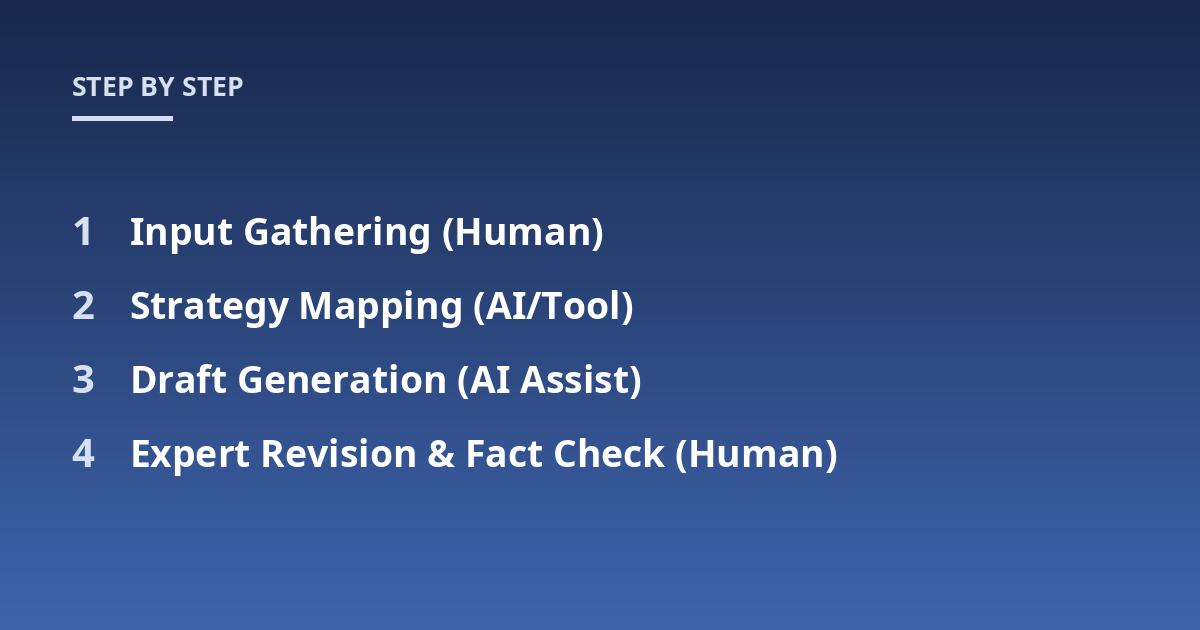
Optimizing your content operations is about building guardrails around powerful AI tools. The workflow should be linear and highly regulated:
- Input Gathering (Human): Conduct thorough competitor gap analysis, identifying specific, unanswered questions in the top 10 search results for a given topic.
- Strategy Mapping (AI/Tool): Use AI to map these gaps into potential article structures and identify required schema types based on the expected content format.
- Draft Generation (AI Assist): Generate the first draft using controlled prompts, ensuring the prompt specifies tone, target persona, word count constraints, and necessary local references.
- Expert Revision & Fact Check (Human): The team revises the article, adding all unique data points, specific expert opinions, or citations that cannot be found online, this is where E-E-A-T is built.
- Technical Optimization (Automation): Use tools to finalize alt text, apply internal links based on a pre-defined linking map, and inject the necessary JSON-LD schema code before publishing.
Mastering this multi-stage process, from initial human insight to final automated technical implementation, is how established teams successfully leverage AI while maintaining deep authority signals for search engines.
Frequently Asked Questions About Automating SEO with AI Tools
What is the fundamental goal of automating WordPress SEO?
The primary objective is optimizing efficiency and scale. Rather than spending time on repetitive tasks like basic keyword placement or generating boilerplate text, automation systems free up human specialists to focus solely on high-value activities: deep domain expertise, original research, and refining the unique human voice that search engines reward.
How can AI tools improve technical SEO elements?
AI tools excel at pattern recognition. They can automate complex tasks like ensuring consistent usage of structured data (Schema), auditing internal linking opportunities across thousands of pages, or flagging images missing descriptive alt-text, all keeping your site technically clean and highly crawlable.
Does using AI impact Google’s quality guidelines?
No. The issue isn’t the use of AI itself; it’s the intent behind its use. Search engines penalize thin or unedited content. If you generate text solely for SEO volume without adding unique value, proprietary research, or concrete local insight, Google will flag it as low-quality generated content.
Should I rely on AI tools for keyword research?
AI is an excellent assistant for clustering and expanding initial ideas. However, relying solely on its suggestions is risky. A seasoned SEO specialist must validate the intent behind the keywords using Google’s own Search Console data and checking local search signals specific to your operating region.
What are the constraints when automating multilingual SEO?
The main constraint is cultural fidelity. Automation can handle translation, but localization requires human input. You must ensure that automated workflows include steps for reviewing tone, appropriate idioms, and locally relevant case studies to prevent culturally awkward or inaccurate published content.
Next Steps: Scaling Your SEO Operations
To maximize the return on your investment in automation, view your technology stack as interconnected parts. Start small, perhaps automating only alt text and internal linking suggestions for a single content type, then prove the measurable benefit before expanding. By treating AI as an advanced pair of hands, rather than a replacement mind, you build efficiency without sacrificing genuine authority.
If improving site visibility requires dealing with multiple languages or significantly complex data structures, evaluating a specialized service like Optimizing for AI Overviews: Key Schema Types to Improve Search Visibility can accelerate your journey toward truly global market leadership. Focus always on the user intent first; technology only serves to make that human experience scalable.
Other posts from the category
There are no posts for the selected category.

Latest posts from the category
-

What makes an effective Category Page for AI
June 5, 2026
-

What Influences the cost of AI Optimisation
June 1, 2026
-

Organisation Schema: how to help AI understand your brand
May 27, 2026