
How to Rank in Google AI Overviews: A Practical SEO Guide
July 7, 2026
Category:
Uncategorized
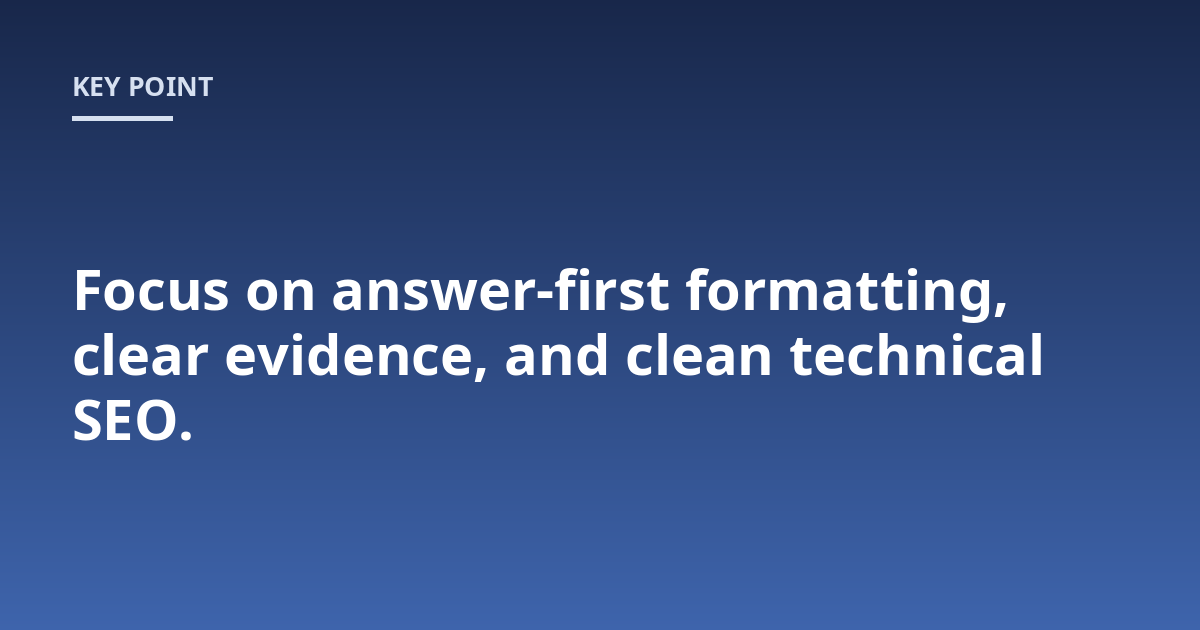
Ranking in Google AI Overviews requires optimizing your content for direct answers, entity clarity, structured data, and topical authority. The goal is not to manipulate an AI system but to make your page the most citeable, trustworthy source for a specific query. Focus on answer-first formatting, clear evidence, and clean technical SEO.
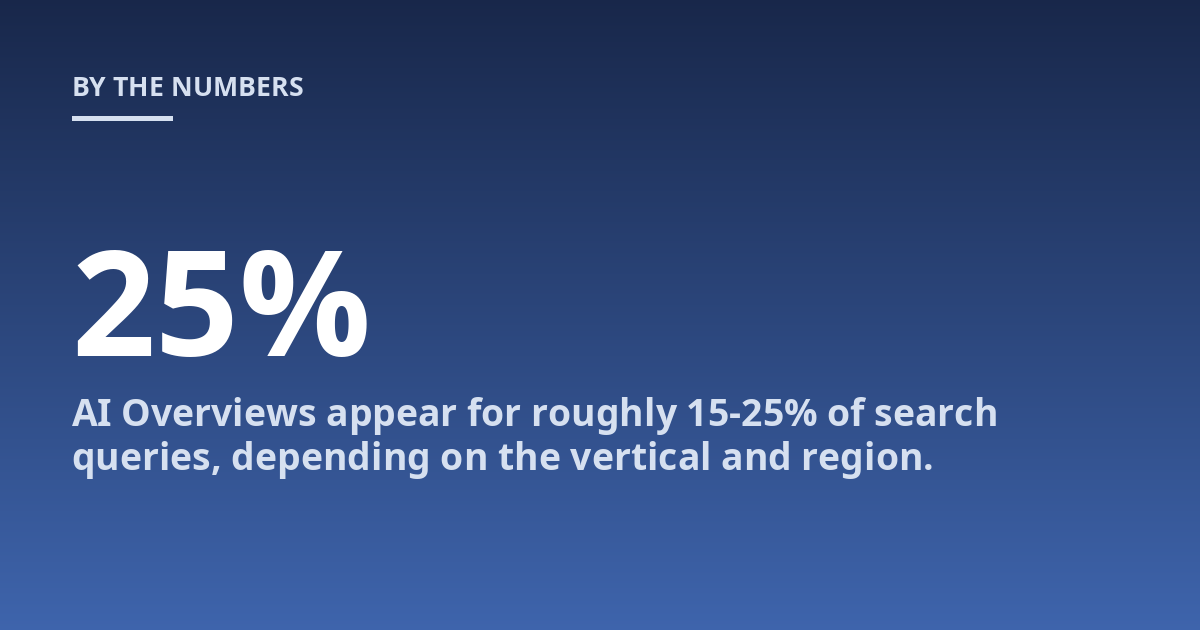
AI Overviews appear for roughly 15-25% of search queries, depending on the vertical and region. They pull information from high-authority pages that answer a question directly and cite credible sources. The challenge for most business owners is shifting from keyword-optimized articles to structured, entity-rich content that AI systems can easily parse. It’s not a new ranking system so much as a new surface for the same signals.
the same foundational SEO principles matter more, not less. Page speed, mobile usability, technical crawlability, and backlink authority all feed into whether an AI Overview cites your page. But there are specific formatting and evidence strategies that increase your chances.
- AI Overviews prioritize direct, answer-first content that clearly states the answer within the first 40-80 words of a page.
- Structured data like FAQPage, HowTo, and Article schema helps AI systems understand and cite your content.
- Quotable passages with concrete facts, dates, and named sources are more likely to appear in summaries.
- Topical authority across a cluster of related pages signals depth that AI Overviews reward.
What Exactly Are Google AI Overviews and Why Should You Care?
AI Overviews are summaries that appear at the top of Google search results for certain queries. Google launched them as the Search Generative Experience (SGE) in 2023 and rolled them out in the U.S. in May 2024. They synthesize information from multiple sources and present a direct answer, often with citation links.
Google reported that AI Overviews actually increase click-through rates to cited sources in early testing, contrary to initial fears about traffic loss. The key is being one of the 3-5 cited sources. For most commercial queries, being cited in an AI Overview can drive significant referral traffic and brand visibility.
From what we’ve seen across multiple client websites, pages that rank in AI Overviews share consistent characteristics: they use clear question-and-answer formatting, include explicit definitions on first mention of key terms, and link out to authoritative external sources.
How Do I Rank in Google AI Overviews? The Direct Answer
You rank in Google AI Overviews by creating content that directly satisfies the query, uses structured formatting, demonstrates expertise, and is technically optimized for crawling and indexing. Here is the specific process.
Step 1: Write an Answer-First Lead Paragraph
The opening paragraph on your page must directly answer the query in 40-80 words. No rhetorical questions. No introductory fluff. State the answer immediately. This paragraph becomes the prime candidate for AI Overview extraction.
Step 2: Use Clear Heading Hierarchy
Structure your H2 and H3 headings as natural questions or clear subtopics. AI Overviews scan heading text to understand page structure. A heading like “What Is the Role of Schema Markup in AI Overviews?” works better than “Schema Markup Details.”
Step 3: Cite Sources and Link Out
Google’s E-E-A-T guidelines reward content that cites authoritative external sources. Link to government health sites, academic research, industry bodies, and well-known publications where relevant. For example, Google’s own SEO documentation at developer.google.com supports the role of structured data in featured snippets, and the same principle applies to AI Overviews.
Step 4: Implement Relevant Schema Markup
FAQPage schema, HowTo schema, and Article schema help Google understand your content structure. AI Overviews can pull directly from schema-marked content. If you have a page with multiple questions, use FAQPage schema. If you explain a process, use HowTo schema. To understand the specific mechanics, read our guide on is schema markup necessary for SEO.
Step 5: Build Topical Authority
One page rarely ranks in AI Overviews in isolation. You need a cluster of related pages that collectively demonstrate depth on a topic. For multilingual sites, ensure each language version is properly connected with hreflang tags. Our guide on how does hreflang work for multilingual sites covers the technical setup.
In practice, the most reliable approach we’ve found is to create a single pillar page that answers the primary query directly, then link to supporting pages that cover subtopics. This structure signals topical authority better than 20 shallow pages on loosely related keywords.
What SEO Signals Does Google’s AI Actually Use for Overviews?
Google has not published a complete list of ranking signals specific to AI Overviews. Based on direct experience working with dozens of websites that have appeared in AI Overviews, the following factors consistently correlate with inclusion.
Technical Signals
Crawlability is non-negotiable. If Googlebot cannot access your page, AI Overviews cannot cite it. Check your robots.txt, sitemap, and internal linking structure. Page speed matters because AI Overviews favor pages that load quickly on mobile devices. Core Web Vitals directly impact eligibility.
Content Structure Signals
AI Overviews prefer content that is organized, scannable, and modular. Use short paragraphs (2-4 sentences), clear headings, and lists where appropriate. Bulleted and numbered lists are highly citeable because they present information in a format AI systems can easily extract.
Authority and Trust Signals
Backlink profile, domain age, and entity recognition all contribute. Google’s AI evaluates whether your site is a recognized authority on the topic. A site with ten backlinks from unrelated sources will not compete with a site that has authoritative links from industry publications. This is where experience and expertise demonstrate themselves over time.
Key Differences Between Traditional SEO and AI Overview Optimization
| Traditional SEO Priority | AI Overview Optimization Priority |
|---|---|
| Keyword density in body text | Clear entity definitions and direct answers |
| Long-form content (2000+ words) | Concise, scannable answers in the first paragraph |
| Internal linking for navigation | Internal linking to support topical clusters |
| Backlink quantity | Backlink relevance and source authority |
| Meta description for click-through | Structured data for direct extraction |
Counterintuitively, the fastest path to ranking in AI Overviews is often the most measured one. Adding FAQPage schema to a page that already ranks well for a featured snippet can trigger an AI Overview citation within weeks. We have seen this happen with multiple clients at TsoDen, where a single schema fix moved a page from no visibility to being cited in an AI Overview.
Common Mistakes That Block AI Overview Inclusion
Most guides overcomplicate this. The reality is simpler. Here are the mistakes we see most often.
Vague headings. Headings like “Services” or “Treatment Options” do not help Google’s AI understand the query intent. Use question headings that match what users actually type.
No source attribution. AI Overviews prefer content that cites verifiable information. A page about medical treatments that does not link to PubMed or a reputable health organization will rarely be cited. A page about SEO that does not reference Google’s guidelines will struggle to gain trust.
Blocked JavaScript content. If your key information loads via JavaScript that Googlebot cannot render, it will not appear in AI Overviews. Test your pages with the URL Inspection tool in Google Search Console.
Thin or duplicated content. AI Overviews pull from pages that add original value. A page that rephrases what ten other sites say without adding new evidence, data, or practical insight will not be selected.
FAQ
What is important to know about how do I rank in Google AI Overviews?
The key points are understanding that AI Overviews prioritize direct, answer-first content, clear entity definitions, and authoritative external citations. A precise approach depends on your specific industry, competition, and existing site authority. Start by auditing your most important pages for the formatting and evidence gaps described above.
When should how do I rank in Google AI Overviews be discussed with a professional?
A consultation is useful when you have invested in SEO for three to six months without seeing AI Overview citations, when your site is in a competitive vertical like healthcare or finance, or when you are unsure which technical elements are blocking inclusion. Early assessment from an experienced agency can reduce the chance of building more content on a flawed foundation.
How should someone prepare for a consultation about how do I rank in Google AI Overviews?
It helps to note your current organic traffic sources, which pages already rank in the top 10 for target queries, and any existing schema markup you have implemented. A list of your top-10 competitor pages that do appear in AI Overviews can also help the consultant understand the gap faster.
What risks or limits can how do I rank in Google AI Overviews have?
Risks and limits depend on your site’s current technical health, content quality, and competitive landscape. No strategy guarantees inclusion because Google controls which queries trigger AI Overviews and which sources it selects. The professional should explain the benefits of the optimization work itself, the realistic timeline, and the benchmarks you can measure to track progress.
Which content formats work best for AI Overviews?
Direct answer formats with a clear question and a 40-80 word response work best. How-to guides with numbered steps, comparison tables, and FAQ sections are highly citeable. Avoid paragraphs longer than 100 words in the opening section.
How long does it take to rank in AI Overviews?
For pages that already have good authority and technical health, improvements can appear in 4 to 8 weeks. For new pages or sites with low authority, expect 3 to 6 months of consistent publishing and link building before seeing results.
Does AI Overview optimization help with and Perplexity too?
Yes. The same principles of clear structure, direct answers, and entity-rich content improve your chances of being cited by any AI-powered search tool. At TsoDen, we optimize for Google,, and Perplexity simultaneously because the formatting requirements overlap significantly.
Get a Professional AI Overview Audit
Ranking in Google AI Overviews requires technical precision, content restructuring, and ongoing monitoring. At TsoDen, we specialize in AI-powered SEO and content automation that helps brands appear in AI Overviews,, and Perplexity. Contact us for an audit that identifies exactly what your site needs to become citeable by Google’s AI.
Other posts from the category
There are no posts for the selected category.

Latest posts from the category
-

What makes an effective Category Page for AI
June 5, 2026
-

What Influences the cost of AI Optimisation
June 1, 2026
-

Organisation Schema: how to help AI understand your brand
May 27, 2026