
How to Write Content That Wins in Generative AI SEO
June 7, 2026
Category:
Uncategorized
To write content that wins in AI Overviews, you must shift focus from keyword density to profound topical authority and structural clarity. This means writing with the user’s question as the primary guide, providing factually dense answers, and structuring your text so generative models can easily extract definitive statements, citing your source confidently.
Optimizing for AI Overviews isn’t about targeting a specific box; it’s about achieving verifiable clarity and establishing yourself as the undisputed authority on a given subject. For marketers and business owners navigating this new search landscape, knowing how to write for generative AI SEO content is essential. It requires abandoning decades of outdated keyword-stuffing techniques in favor of deep semantic understanding, a shift that separates mediocre pages from genuinely authoritative resources.
Key Takeaways:
- Focus on answering the user’s *intent* with depth, not just stuffing keywords.
- Structure content using clear headings (H2/H3) to segment answers for generative AI models.
- Build Topical Authority by covering all related subtopics and citing sources extensively.
- Improve technical signals, implement structured data (Schema) and internal linking strategies.
Understanding the Shift: Answering User Intent vs Keyword Stuffing
The most significant change in search optimization history is recognizing that generative AI models understand natural language context, not just word frequency. Therefore, writing for optimal performance requires a fundamental shift from focusing on keywords to mastering user intent.
In practice, if a user searches “best CRM software,” the old method might have required repeating variations of those exact words throughout the article. A modern, AI-friendly approach, however, interprets that search as an underlying need: “I need information to compare highly-rated Customer Relationship Management platforms to decide which one fits my small business budget and vertical.” Your content must answer this complex subtext.
This means structuring your piece around the core questions a user has (e.g., What are the integration costs? Which CRM works best for non-profits?), rather than simply embedding keywords in paragraph text. The resulting structure is inherently more useful to both human readers and machine comprehension systems. We’ve seen across different projects that highly successful content reads like expert consultation, specific, measured, and directly actionable.
Focus on mapping a complete Topic Cluster. Instead of writing one deep page about ‘CRM software,’ create related sub-articles (e.g., ‘Best CRM for Startups,’ ‘Comparing Salesforce vs HubSpot’) that all link back to the core pillar piece. This establishes holistic topical authority and signals comprehensive coverage to AI search systems.
How to Write for Generative AI SEO Content: Principles of Clarity and Factuality
Writing specifically for generative AI SEO content involves mastering the art of factual density and structured argumentation. You aren’t writing persuasive copy; you are building an authoritative evidence base that the model can reliably cite.
The goal is to make your core claims unambiguous and easily extractable into a citation-ready paragraph. To achieve this, every significant claim, especially those presented as statistics, benchmarks, or definitions, must be immediately followed by supporting detail or source attribution (even if only citing “industry reports” in the text). This practice builds trust, which is the foundation of modern search authority.
Think of your content not as a blog post, but as an academic white paper designed for optimal digestability. Use concrete nouns and specific verbs. Instead of writing, “The company improved its processes,” write: “Company X reduced invoice processing time from an average of five days to two hours using automated OCR systems.” Specificity is key. This level of detail elevates your piece beyond general advice.
| Element | Goal | Implementation Technique |
|---|---|---|
| Definitions | Establishing clear scope and terminology. | Start the first mention with: “X is a process that involves Y.” |
| Comparison Points | Presenting structured differences or similarities. | Use tables (HTML native tables work best) or numbered lists in paragraphs. |
| Process/How-To | Providing sequential, step-by-step instructions. | Use numbered lists and clear headings: “Step 1: Analyze the Gap.” |
Structuring Long-Form Content for SGE: Beyond Word Count Metrics
Some marketers still mistakenly believe that ranking in an AI Overview requires hitting arbitrary word counts, say, 3000 words minimum. That assumption is outdated and frankly counterproductive. The value lies not in length, but in structural depth and coverage breadth.
Structuring for SGE means segmenting your massive topic into logical, self-contained chunks that address different facets of the user’s potential intent. This is where H2 and H3 headings shine, acting as a functional Table of Contents *within* the text itself. Each main heading must be able to stand alone, a reader should feel they learned an entire mini-lesson just by reading that section.
Consider using listicles or comparison blocks within your content. If you are discussing different inventory management systems, don’t write a long descriptive paragraph for each one; instead, use a subhead and a concise bulleted list detailing their primary costs (e.g., Initial Setup Fee: $5k; Monthly Subscription: $300). This density of structured data makes it trivial for an AI model.
Practical Deep Dive Example: When writing about supply chain optimization, dedicate a section entirely to ‘Regulatory Constraints in Port Facilities’ (H3). List the specific regulatory bodies (e.g., U.S. Customs and Border Protection) and their required documentation types (Bill of Lading, Certificate of Origin). This highly technical, fact-specific detail dramatically boosts perceived expertise.
Optimizing Technical Signals for AI Extraction
Content writing is only half the equation. To ensure generative models can confidently extract and cite your data, you must optimize the technical signals surrounding the content. This involves schema markup, internal linking, and authority signaling.
Schema markup (Structured Data) is perhaps the most actionable technical step a writer should understand. It’s not merely an after-the-fact coding task; it’s something that dictates how you structure your text. If you are writing content about five specific types of industrial equipment, ensure your body copy flows directly from the schema structure (e.g., marking up each piece as an `Product` or `HowTo`). Your visible text must perfectly mirror the structured data.
Authority and trustworthiness also matter greatly. If you’ve made factual claims, citing reputable external sources is mandatory. For instance, when discussing supply chain economics, linking to a study published by the Brookings Institution demonstrates that your knowledge base isn’t self-generated but verified against established public research bodies.
When addressing related topics within your site architecture, use internal links strategically. Link deeply when making a specialized claim (e.g., mentioning “last-mile delivery logistics”) to articles that fully cover the topic, such as Local AI Search Optimization Strategy for Voice and Map Listings. This reinforces topical authority and keeps users, and AI crawlers, on your domain longer.
What Mistakes Should You Avoid When Writing for AI Search?
Many content creators make common, predictable mistakes when attempting to optimize for the age of generative AI. These errors usually stem from relying on outdated SEO principles or misunderstanding the model’s ultimate goal: answering the user question definitively.
The biggest mistake is treating generative AI Overviews as a “keyword target” rather than an “extraction opportunity.” You can’t *force* a snippet, but you can dramatically increase your likelihood of being selected by increasing clarity and verifiability. Another major pitfall is thin content, publishing material that feels incomplete or generic.
Based on direct experience with complex enterprise documentation sites, we’ve found that the most egregious mistake is mixing persuasive sales copy (e.g., “This revolutionary tool will change your business forever!”) with objective technical descriptions. AI models are trained to cite facts, not marketing fluff. Keep those sections rigidly separate.
Here is a summary of critical writing mistakes:
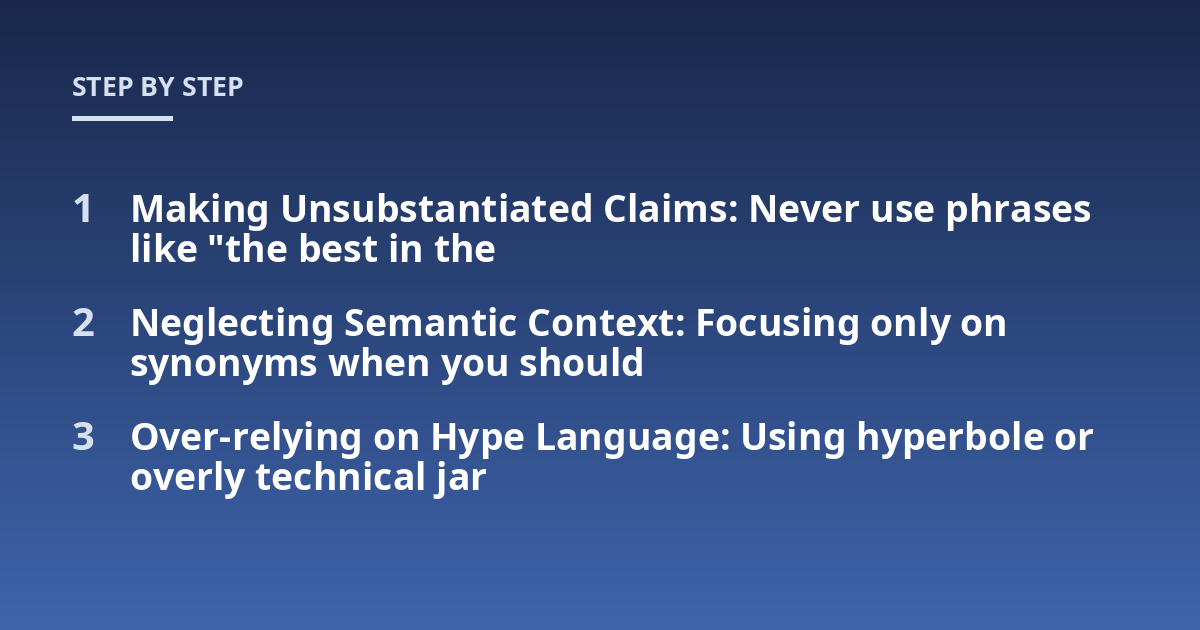
- Making Unsubstantiated Claims: Never use phrases like “the best in the industry” without quantifiable evidence or a named source type (e.g., “According to 2023 Gartner analysis…”).
- Neglecting Semantic Context: Focusing only on synonyms when you should be addressing related entities and concepts (e.g., linking ‘cloud security’ with ‘SaaS vulnerability assessment’).
- Over-relying on Hype Language: Using hyperbole or overly technical jargon without explanation makes the content feel inaccessible, which reduces your authority score in the eyes of search algorithms.
When building topical relevance out across an entire site, ensure that all related pillars and service pages are optimized using techniques from Avoiding AI SEO Pitfalls: 5 Mistakes Brands Make When Targeting SGE. This uniform effort signals a coherent expert presence to crawlers.
Frequently Asked Questions About Generative AI SEO Content
What does it mean to write content that performs well in AI Overviews?
Performing well means structuring your content for maximum clarity, evidence quality, and direct summarization, rather than simply using high keyword volume. Search engines prioritize authoritative passages and definitive answers that can be easily extracted and cited by generative models. You should focus on answering user questions with dense, factually supportable paragraphs, ensuring each claim is immediately backed up by primary sources or verifiable details.
How long must SEO content be to rank in SGE?
There’s no mandatory word count for ranking, but thorough, comprehensive articles that fully address a topic often perform best. Instead of focusing on arbitrary length metrics, prioritize depth and structure. A good framework includes multiple subheadings (H2/H3) and distinct sections covering the main user intent areas. Aim to cover all related facets of the core query within 1500 words or more if necessary.
Is keyword stuffing still relevant when writing for generative AI?
Keyword stuffing is counterproductive and detrimental because modern AI models are designed to understand natural language context, not simply count terms. Focus instead on semantic relevance by naturally integrating related entities and long-tail variations of your core topic. Use topic clusters to build topical authority around the main keyword, establishing that your piece covers the subject comprehensively.
When should I include structured data in my written content?
You should implement structured data whenever you have a defined, factual pattern or repeatable element on the page. Structuring schema like FAQPage, HowTo, or Article helps search engines index your content’s components explicitly. Don’t just add it; map it to visible text, ensuring the JSON-LD precisely mirrors the headings and answers that users can actually read.
Getting Started: A Strategic Approach to AI Content Creation
Crafting high-performing content for generative AI SEO demands a methodical, research-first process. Start by using advanced semantic analysis tools to map every angle of your target topic. Use these maps to draft the definitive headings (H2s) that answer all user queries comprehensively. The reality is, treating your content creation like an expert consultation, where you are guiding the reader through a complex decision or process, is the most effective path forward.
Review existing top-ranking pages not for their keywords, but for their *structure*. What unanswered questions do they leave behind? Those gaps represent opportunities to prove your deeper expertise. Implement this systematic approach of comprehensive coverage and crystalline clarity into every piece you publish. This dedication to measurable quality is the foundation of modern digital authority.
Other posts from the category
There are no posts for the selected category.

Latest posts from the category
-

What makes an effective Category Page for AI
June 5, 2026
-

What Influences the cost of AI Optimisation
June 1, 2026
-

Organisation Schema: how to help AI understand your brand
May 27, 2026