
Is link building still important in 2026?
June 15, 2026
Category:
Uncategorized
Yes, link building remains a crucial component of modern SEO, but its purpose has dramatically shifted from merely adding volume to solidifying topical authority and demonstrating trust. In the AI-driven search era (including Google’s AI Overviews), high-quality backlinks function as proof points, signals that specialized experts recognize your site as an essential resource in a given niche. Focus must now be on genuine subject matter expertise and contextual relevance.
In practice, effective link building today requires moving beyond simple outreach for links; it demands strategic relationship building within your industry. You must position your content as the definitive source material that others will naturally cite. We’ve observed that purely mechanical or uncontextualized linking tactics are increasingly ignored by search algorithms and often penalized. A robust strategy integrates deep technical SEO with sophisticated content mapping to capture both organic search and emerging AI voice query opportunities.
- The Core Shift: Link volume is secondary; link quality, authority, and thematic relevance are paramount.
- Modern Function: Links validate your expertise (E-E-A-T) for AI models and search algorithms alike.
- Best Practice Focus: Prioritize digital PR, citation generation, and becoming a go-to resource in local or niche communities.
- Technical Layer: Link signals are amplified by strong internal linking structures and optimized site architecture.
How Has Search Engine Ranking Changed for Link Building?
The fundamental principle that links validate authority remains, but the mechanics of validation have evolved significantly due to generative AI. Search engines no longer just count inbound links; they analyze the relationship between the linking page and your content, the semantic context surrounding the link is critical.
Think of a backlink not as a vote, but as a specialized citation from an academic journal or a recognized industry standard. If authoritative sites about automotive mechanics are citing your guide on brake diagnostics, that signal carries vastly more weight than having ten random links from unrelated forums. Search engines, and consequently AI Overviews, prioritize deep topical authority.
To maximize link value in 2026, you need to map out a semantic topical cluster. Instead of creating five standalone articles about plumbing services, structure them around core concepts (e.g., “Water Heater Maintenance”) and link everything back to those central pillar pages. This shows the search engine that your site comprehensively covers the entire subject matter from start to finish.
In practice, when identifying potential linking assets, don’t aim for general “backlinks.” Instead, identify “resource gaps”, specific facts or data points in a highly authoritative industry guide that your article can fill. Offering that unique piece of knowledge is the strongest magnet for natural citation links.
What Makes a Link High-Quality in the Age of AI Search?
High quality isn’t just about Domain Authority; it involves how deeply and naturally the link integrates into the citing content. The most valuable backlinks are contextual, meaning they appear within rich, educational text that directly discusses your topic area. We need to look beyond simple “link farms” or directory listings.
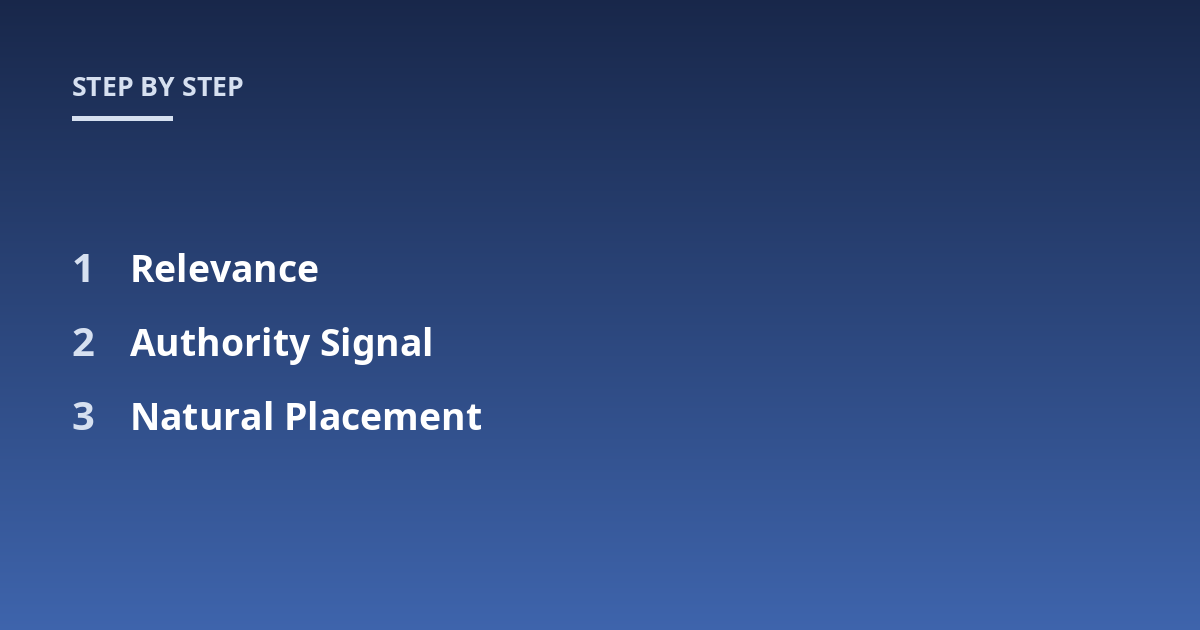
Three elements define modern link quality:
- Relevance: Does the linking site’s audience overlap with yours? A niche link from a specialized industry publication is exponentially better than a high-authority link from a general news outlet.
- Authority Signal: Is the site well-respected, cited by other established entities, and visible to Google Search Console reports? The older a site has been operating within its field, the higher the trust signal it carries.
- Natural Placement: The link must feel like part of the reading experience, a recommended resource or factual citation, and not simply tacked on.
When considering your overall technical structure to support these links, optimizing your visual assets is crucial. For example, ensure you know how do i optimize images for SEO; poorly optimized media slows the site and degrades user experience, negating the value of external signals.
Beyond Backlinks: How Can Internal Linking Boost Visibility?
Many marketers mistakenly view internal linking as merely a structural element. It’s not. Internal links are fundamental to guiding both users and search engine bots through your site’s entire topical structure, proving depth and connectivity. A strong internal link strategy makes your content more “discoverable” within Google’s index.
If you’re building a sprawling service page or detailed informational guide, treat it like a network of interlinked chapters. Every piece of supporting content should naturally point to the core pillar pages and related cluster articles. This helps distribute “link equity” (or PageRank value) across your site, reinforcing topic relevance everywhere.
Understanding how search bots navigate your site is key to maximizing this effect. You must first master concepts like what is crawl budget. Knowing that Google allocates resources, the crawl budget, helps you understand which pages need the most internal linking emphasis to ensure they get seen promptly and thoroughly.
| Signal Type | Description for AI Search | Actionable Goal |
|---|---|---|
| Contextual Links | Citations embedded within educational text, proving expert consensus. | Develop deep data assets that require citation (e.g., original research). |
| Local Citations | Mentions of your business in geographic directories or local news sources. | Build profiles on relevant local listings and industry roundups. |
| Internal Depth | The logical flow from pillar content to cluster supporting material. | Implement highly structured internal linking matrices using clear anchor text. |
Why Do Some Link-Building Methods Still Fail in 2026?
A persistent misconception is that a link simply needs to exist. search engines are exceptionally good at detecting patterns of manipulative behavior, often labeled as spam or unnatural linking. The biggest failures involve low-effort bulk content and over-optimization.
We’ve seen firsthand that attempting generic outreach, sending out the same personalized email asking for a link to various unrelated sites, is flagged immediately by modern algorithms. These methods lack natural intent and conversational integration, which is what AI models look for.
- Link Schemes: Attempting to purchase links or participate in circular linking (Site A links to B, and B links back to A) without genuine utility violates quality signals.
- Low-Value Directories: Pages that exist solely to gather backlinks, often with minimal unique content, carry almost no weight today.
- Anchor Text Stuffing: Forcing the target keyword into every link text piece sounds unnatural and manipulative, triggering penalty flags.
The most reliable approach here is usually simple: create genuinely irreplaceable information. This focus moves the effort from “building links” to “creating content that *demands* links.”
What Is Topical Authority vs. Link Building?
Topical authority refers to the demonstrated expertise across an entire subject domain, not just one keyword. While link building is a mechanism to prove this authority (by having others reference it), topical authority is the desired outcome.
Think of a medical consultation in a local clinic, the doctor doesn’t just treat the single symptom; they show you how the entire system works, referencing anatomy and related care. Your content must do the same thing. By achieving true topical depth on topics like “sustainable commercial roofing practices,” for example, your site naturally becomes the definitive educational source that industry experts want to cite.
This requires more than just adding links; it means developing a rich knowledge graph across your entire website architecture. This advanced mapping greatly improves citation readiness and overall visibility in complex search environments like Google’s AI Overviews. For detailed technical advice on this, reviewing principles of how do i optimize images for SEO helps reinforce the visual component of authority signals.
Best Strategies for Earning High-Quality Backlinks in 2026
To acquire links that count, you must focus on digital public relations and content assets built for citation. Instead of asking for a link, build something people will naturally want to reference.
- Create Original Data Sets: Run a unique survey in your industry (e.g., “Survey of Small Business Marketing Budget Allocation in Q4 2025”). Hosting this original data and making it freely downloadable ensures other marketers or journalists will cite your findings.
- Resource Hubs and Guides: Develop exhaustive, high-quality guides that solve a complex problem completely (e.g., A definitive guide to federal commercial building codes). These naturally become reference materials for industry professionals searching for information.
- Participate in Industry Discussions: Engage on platforms like LinkedIn or niche forums by answering expert questions and offering unique insights, which can sometimes lead to organic mentions and links back to your resources.
FAQ
What is important to know about link building in 2026?
In 2026, the importance of links pivots from quantity to quality and context. The primary goal isn’t simply ranking; it’s demonstrating deep topical authority and trust. Search engines interpret high-quality backlinks as reliable citations, confirming that multiple established authorities vouch for your unique expertise within a specific niche.
When should link building be discussed with a professional SEO?
A consultation is essential when you feel stagnancy in organic traffic or if you’ve implemented previous linking strategies without measurable results. Professional assessment helps diagnose whether your problem lies in poor backlink quality, inadequate topical coverage, or technical barriers (like excessive crawl budget waste). Early evaluation prevents wasting resources on defunct tactics.
How should I prepare for a consultation about link building?
Gather specific data points and previous campaign records. This includes metrics like historical rankings, key competitor sites, any past outreach efforts (including emails or reports), and current content gaps you’ve identified. Having these detailed materials allows the strategist to provide concrete next steps rather than generalized advice.
What risks or limitations can poor link building have?
The main risk is algorithmic penalty, which can severely impact your site’s visibility and organic traffic overnight. Poor practices include buying links from spam directories, attempting to stuff keyword anchors, or participation in manipulative backlink schemes. Trusting reliable, ethical resources is the most effective way to mitigate these risks.
How can I begin building a modern SEO strategy?
Start by auditing your content for thematic gaps and identifying pillar topics within your core service offering. Before adding any links, ensure the internal linking structure is pristine and that you’ve addressed fundamental technical issues like image optimization and crawl budget management. Content quality must precede link-earning efforts.
Making Your SEO Efforts Measurable
A holistic approach is necessary to succeed in modern SEO. Focus your resources on becoming an authoritative source through genuinely useful content, the kind of material that industry peers *must* cite. Implementing a structured strategy for internal linking, continually updating your data, and pursuing high-relevance digital PR efforts will establish the visible trust needed to maintain top rankings against sophisticated AI search tools.
If your team needs assistance mapping out a robust content cluster or auditing existing link profiles, partnering with an agency specializing in AI SEO and technical optimization can provide the necessary external expertise. Reviewing their full scope of services ensures your site structure is fully optimized for modern search challenges.
Other posts from the category
There are no posts for the selected category.

Latest posts from the category
-

What makes an effective Category Page for AI
June 5, 2026
-

What Influences the cost of AI Optimisation
June 1, 2026
-

Organisation Schema: how to help AI understand your brand
May 27, 2026