
How to Refresh Old Blog Posts for More Traffic in 2025
July 7, 2026
Category:
Uncategorized
Content refresh how to update old posts for more traffic is the process of systematically revising published articles to improve their relevance, accuracy, and search visibility without starting from scratch. A well-executed refresh can restore declining traffic, capture new keyword opportunities, and signal to search engines that your content remains current and authoritative. This guide covers the step-by-step workflow, the data signals to look for, and the decisions that separate a successful update from wasted effort.
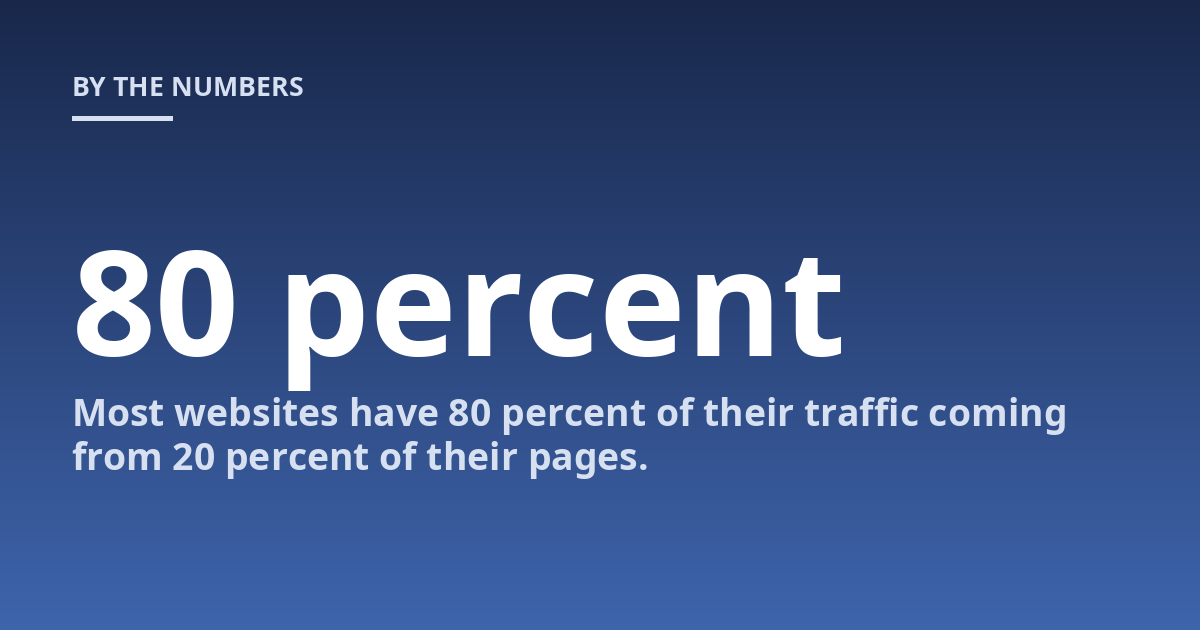
Most websites have 80 percent of their traffic coming from 20 percent of their pages. Those high-performing pages eventually decay. Search results change. Competitors publish newer, deeper content. Your own keyword research reveals fresh questions you didn’t address. The fix is not to write another article on the same topic. That splits authority and creates duplication. The smarter move is to refresh the existing piece. The question is which pages to update, what to change, and how far to go.
- Refresh pages that once ranked on page one for valuable terms but have slipped. Focus on pages with declining traffic or outdated information.
- Rewrite headlines, meta descriptions, and subheadings to match current search intent. Add new sections for questions your original post missed.
- Update statistics, broken links, and references. Verifiable facts from the last 12 to 18 months strengthen authority signals.
- Reassess internal linking. Pass link equity from your best-performing pages to the refreshed post.
What Pages Should You Update First?
Not every old post deserves a refresh. The ones that do share three traits: they used to generate meaningful organic traffic, they rank somewhere between position 5 and 15 for a decent-volume keyword, and they contain factual or structural gaps that a reader can spot in under a minute.
A common real-world case is a how-to guide written four years ago. The screenshots show an old software version. The recommended tool now costs twice as much. User questions in the comment section reveal confusion about a step that isn’t covered. That post is a strong refresh candidate because it already has link equity, topical relevance, and a readership pattern.
Use Data, Not Hunches, to Prioritize
Pull your top 200 pages from Google Search Console. Sort by impressions, then click-through rate. Find pages where impressions are high but CTR is low. That mismatch often means your title and meta description don’t match what searchers now expect. A headline rewrite alone can recover double-digit traffic increases.
Next, sort by clicks and look for a steep decline over the last three to six months. A page that lost 50 percent of its clicks quarter over quarter is bleeding. If the underlying query volume hasn’t changed, your content is no longer satisfying intent.
From what we’ve seen across different projects, the pages that benefit most from a content refresh are those targeting informational queries with commercial overlap. A post titled “How to Choose a CRM for Small Business” from 2021 probably misses new tools, new pricing models, and new integration requirements. That kind of content refresh can move a page from position 9 to position 3 within eight to ten weeks.
When assessing which posts to update, don’t just look at traffic. Look at where that traffic goes next. If a blog post sends users to a conversion page with a conversion rate above 3 percent, updating it earns revenue, not just vanity metrics.
How to Perform a Content Refresh for SEO: The Full Workflow
Content refresh how to update old posts for more traffic follows a repeatable process. You’re not rewriting the entire article from scratch in most cases. You are surgically improving the parts that matter most to search engines and readers.
Audit the Current Content Against Top-Ranking Competitors
Open the top three ranking pages for your target keyword. Compare them to your post across several dimensions: word count, subheadings, examples, data points, images, internal links, and reading level. If every competitor covers a subtopic your post misses, that is the first gap to close.
Check the SERP features too. If Google shows a “People also ask” box with three questions your article doesn’t answer, each of those questions is a subheading you should add. Answer them in 40 to 60 words within the body. That improves eligibility for AI Overviews and voice search responses.
Rewrite the Title and Meta Description
The old headline might be good but not great. Test a new headline that includes the focus keyword earlier and implies a clear benefit. For example, change “Tips for Cold Email Outreach” to “Cold Email Outreach: 7 Data-Backed Tips That Drive Replies.” The second version signals specificity and evidence, both of which improve organic CTR.
Meta descriptions need to match the new content. Keep them under 155 characters. Include the primary keyword once, naturally. Describe what the page will help the reader do, not what the article is about.
Update Facts, Figures, and Sources
Old statistics hurt credibility. A 2019 statistic about social media engagement rates is useless in 2025. Replace it with a published benchmark from the last 12 months. For example, if you reference HubSpot research, verify that the latest report hasn’t updated the number. If it has, cite the new one and note the year.
Broken links are another signal of neglect. Run the page through a broken link checker. Replace dead external links with live, authoritative sources. If no replacement exists, remove the link and rephrase the supporting sentence.
Add Internal Links from Your Updated Pages
One of the most overlooked parts of a content refresh is internal linking. Your newer pillar posts, service pages, and landing pages should link to the refreshed article. If you have written a complete guide on building topic clusters, that is a natural page to link from. Use E-commerce SEO: Product and Category Page Optimization for AI Search as your anchor page for the full workflow. Similarly, the refreshed article should link to newer, more detailed posts on related subtopics. That passes equity through your site and helps Google understand topical relationships. For example, a post about keyword research is a natural candidate. Use Measuring SEO ROI: The Metrics That Actually Matter in the AI Era with the anchor “finding high-intent queries with AI.”
How Often Should You Refresh Content?
No fixed calendar works for every page. Some topics change yearly, like tax regulations or software features. Others, like basic cooking techniques or historical events, change very little. The right cadence depends on the query’s update frequency.
Signal-Based Timing Works Better Than Schedules
Instead of planning a refresh every six months, set up a Google Search Console alert for any page experiencing a CTR drop of more than 20 percent. That decline often signals intent drift. The search engine may have started favoring a different content format or a more recent publication date.
Another signal is a decline in click-through rate from a featured snippet. If your page loses a snippet position, the content refresh should focus on answer clarity. Restructure the paragraph that matches the snippet query, add a table if appropriate, and rephrase the answer so it’s concise enough to appear in a featured result.
The Risks of Over-Optimizing During a Refresh
It is possible to refresh a page too aggressively. Changing the URL, altering the core thesis, or rewriting every paragraph can erase the page’s existing link equity. Google sees a new URL as a new page. The old backlinks stop passing value.
Keep the URL exactly as it is unless the slug is broken or contains a year that makes the content look outdated. If you must change a URL, set up a 301 redirect and update all internal links pointing to the old one.
Another risk is keyword cannibalization. If you update a post and add sections that already exist on another page, you create competing articles for the same query. Before adding a new H2 or H3, search your site for that specific phrase. If another page already covers it, link to that page instead of rewriting it.
Comparison: Content Refresh vs. Republishing vs. Rewriting
| Approach | When to Use | Changes Made | SEO Impact |
|---|---|---|---|
| Content refresh | Page has existing authority but outdated information or gaps | Update stats, add subheadings, rewrite headline, fix links | Preserves backlinks; recovers ranking within weeks |
| Republishing | Page needs structural improvements but core content is strong | Substantial rewrite of multiple sections, new images, new date | Triggers re-crawl; can improve ranking if changes are meaningful |
| Rewriting from scratch | Page targets a query that has completely shifted intent | New URL, new content, new keyword focus | Starts fresh; loses existing link equity unless redirected |
The table above makes the trade-offs clear. Most pages benefit from a refresh, not a rewrite. Reserve full rewrites for pages where the original topic no longer matches what searchers want. For instance, an article about “best smartphones 2020” cannot be refreshed into “best smartphones 2025.” The list changes completely. That page needs a new post, not an update.
How to Measure the Success of a Content Refresh
Traffic recovery does not always happen overnight. Expect to see movement within four to eight weeks after Google recrawls the updated page. To speed that up, resubmit the URL to Google Search Console for indexing after making changes.
Track the Right Metrics
Monitor organic impressions, clicks, and average position for the primary keyword before and after the refresh. If impressions increase but CTR stays flat, your title and meta description need work. If CTR increases but position stays flat, the content itself is likely fine but needs stronger internal links to push it up.
Check your bounce rate and time on page too. A refreshed article that keeps readers engaged for two minutes longer than the original version sends a positive engagement signal. That alone can improve ranking for sites with strong domain authority.
FAQ
What is important to know about content refresh how to update old posts for more traffic?
The key points are identifying which pages have existing authority, which have factual or structural gaps, and what the current top-ranking competitors cover. A precise content refresh strategy depends on reviewing your own analytics and the search engine results page. Without that review, you risk updating a page that doesn’t need it or missing the gaps that actually cause traffic loss.
When should content refresh how to update old posts for more traffic be considered?
A refresh is useful when a page experiences declining traffic, falling click-through rates, or a drop in average search position despite stable keyword volume. Early intervention on a page that once ranked on page one can prevent a slow cascade to page three. The best time to act is the month a quarter-over-quarter decline becomes visible.
How should someone prepare before updating old posts for more traffic?
Start by exporting your top pages from Google Analytics and Search Console. Identify pages with high impressions but low CTR, pages with declining clicks, and pages where the content is more than 18 months old. Prepare a list of competitor pages that outrank you and note the topics they cover that you don’t. Existing backlink data from a tool like Ahrefs or Semrush also helps prioritize pages with strong link profiles.
What risks or limits can content refresh how to update old posts for more traffic have?
Risks include losing existing link equity by changing the URL, creating keyword cannibalization by adding duplicate content, and over-optimizing with excessive keyword insertion. The professional approach is to preserve the original URL, conduct a full site search before adding new subtopics, and keep keyword usage natural. Realistic expectations: a refresh recovers traffic but does not guarantee a return to page one for every query.
Does updating the publication date help with SEO after a content refresh?
Changing the date alone without meaningful content changes is not enough. Google can detect cosmetic updates. A date change combined with substantial rewrites, new subheadings, fresh statistics, and updated internal links signals that the content is worth recrawling and re-evaluating. The date change is a cue, not the cause of ranking improvement.
Conclusion
A content refresh is one of the highest-ROI activities in SEO for any site that has published for more than a year. You already did the hard work of creating a page and earning backlinks. The refresh recaptures that investment by making the page competitive again. Prioritize pages with a track record of rankings that have declined. Audit competitors for gaps. Update facts, rewrite headlines, and strengthen internal links. Measure the outcome through impressions and click-through rates over the following eight weeks. The pages you refresh today will drive more traffic tomorrow than the new posts you start from scratch.
If you need a structured approach to prioritizing and executing content refreshes at scale, TsoDen’s AI-driven SEO platform automates the audit, gap analysis, and content generation steps. Contact us to review your current content inventory and identify the pages with the highest recovery potential.
Other posts from the category
There are no posts for the selected category.

Latest posts from the category
-

What makes an effective Category Page for AI
June 5, 2026
-

What Influences the cost of AI Optimisation
June 1, 2026
-

Organisation Schema: how to help AI understand your brand
May 27, 2026