
Content Ops in the Age of AI: Workflow Tips for SEO Teams
July 27, 2026
Category:
Uncategorized
Effective content ops in the age of AI workflow tips for SEO teams involve shifting focus from sheer content volume to process velocity and authority. The key is building structured workflows that use AI for drafting, clustering, and optimization, but mandate human experts for factual verification, brand voice application, and deep strategic oversight.
The rapid integration of generative AI fundamentally changes the role of the SEO team. Content Ops (Content Operations) dictates how content production moves from isolated writing tasks to scalable, automated pipelines supported by structured data, multilingual campaigns, and advanced topic clustering. To remain visible in search results, and across emerging generative engines like ChatGPT or Perplexity, your workflow must treat AI as an accelerator for efficiency, not a replacement for critical thinking.
- Shift Focus: Prioritize content quality and unique perspective over high volume. Treat AI outputs as first drafts requiring significant human editing.
- Structure Processes: Implement centralized Content Ops management that automates content idea generation, optimization (e.g., structured data application), and internal linking protocols.
- Verify Everything: Mandate a mandatory verification step for all facts, statistics, and claims derived from AI models. Accuracy is your primary SEO signal now.
- Focus on Global Reach: For advanced visibility, map multilingual campaigns alongside deep technical implementation of tags like hreflang protocols to maximize crawlability across regions.
How should we structure content for modern AI search engines?
AI search engines interpret intent and authority, not just keyword density. In practice, this means building deep topic models rather than optimizing single pages for singular keywords. A structured approach must anticipate how large language models (LLMs) will synthesize information from your site to answer a user’s query.
To prepare content for AI consumption, structure it using clear, declarative headings and consistently defined entities. Think of every section as an answer to a direct question, which is exactly what generative engines favor. The goal isn’t just visibility on the Search Engine Results Page (SERP); it’s appearing in the synthesized summary box or the chatbot answer.
Structuring for clarity: The role of schema and data
One critical component of Content Ops is making your content machine-readable. Using structured data, or schema markup, signals to search engines exactly what type of content you’re providing, whether it’s a review, a how-to guide, an FAQ block, or a local business listing in Minneapolis. This goes far beyond simply optimizing titles.
When planning your content structure, ensure you dedicate specific sections for lists and clear definitions using structured data types like ‘FactCheck’ or ‘HowToStep’. We recommend focusing on getting Structured Data for AI Overviews: Schema Types That Drive Clicks correct because this type of detail is directly interpretated by ranking systems.
Building Topic Authority with Semantic Clusters
A highly technical site, such as a global service provider managing multi-language campaigns, needs content that links concepts together. Instead of creating ten standalone blog posts on “SEO tips,” create one pillar page (“The Definitive Guide to Modern SEO”) and link out from it to smaller, focused clusters like “Implementing Hreflang Tags” or “Automating WordPress Content.” This shows comprehensive coverage of a topic area.
When reviewing content clusters, don’t just check internal links. Verify that the supporting cluster pages are making concrete, verifiable claims supported by expert quotes or data points. AI struggles to rank authority based on mere linkage; it requires evidence depth and human expertise within each piece of content.
What is a scalable Content Ops workflow using generative AI?
A scaled Content Ops workflow defines the necessary processes and tools that allow an SEO team to maintain high content velocity without sacrificing quality or accuracy. The process flows across idea generation, drafting, technical implementation, legal review, and publication.
The 5-Stage Workflow Cycle
Instead of viewing AI as a single tool, view it as an integrated set of process aids within a managed workflow. A typical modern workflow looks something like this:
| Workflow Stage | Goal | Tool/AI Role | Human Intervention Required |
|---|---|---|---|
| 1. Topic Discovery | Identifying topic gaps and intent clusters. | AI clustering, competitive gap analysis (e.g., finding unanswered user questions). | Validation of commercial viability; verifying source data. |
| 2. Outlining & Draft Generation | Creating a robust initial draft structure with headers and basic content blocks. | AI outlines, generating multiple perspectives for comparison. | Injecting brand voice; enforcing specialized terminology (e.g., multilingual campaigns); fact-checking all claims. |
| 3. Optimization & Refinement | Applying SEO signals and technical checks to the draft. | AI optimization for readability, generating meta descriptions, suggesting internal links. | Updating Why Hreflang Tags Matter More Than Ever for Global SEO based on specific geo targets; localizing language nuances. |
| 4. Review & Compliance | Final quality check, technical integration, and legal sign-off. | AI grammar checks, tone analysis (not the final arbiter). | Mandatory human expert review for factual accuracy; passing through a dedicated style guide check. |
The Crucial Role of Human Governance
Many agencies focus on getting AI to produce content fast enough, skipping Stage 4: Governance. The most efficient process breaks the output into distinct human-review gates. Never publish an article that goes straight from “AI Draft” to “Live.” Your team must act as editors and fact-checkers first.
Generative Engine Optimization Ranking in ChatGPT and Perplexity provides a helpful blueprint for automating some of these complex processes, but even with those tools in place, the final layer of human judgment, the context check, remains non-negotiable. This is how you elevate content from robotic filler to genuine expertise.
What metrics define success in modern SEO workflows?
Success indicators have shifted significantly away from purely mechanical ranking factors (like keyword density or domain age) toward measurable signals of authority, user experience, and deep topic understanding. You must measure the efficiency gains while quantifying actual business impact.
From Traffic Volume to Authority Signals
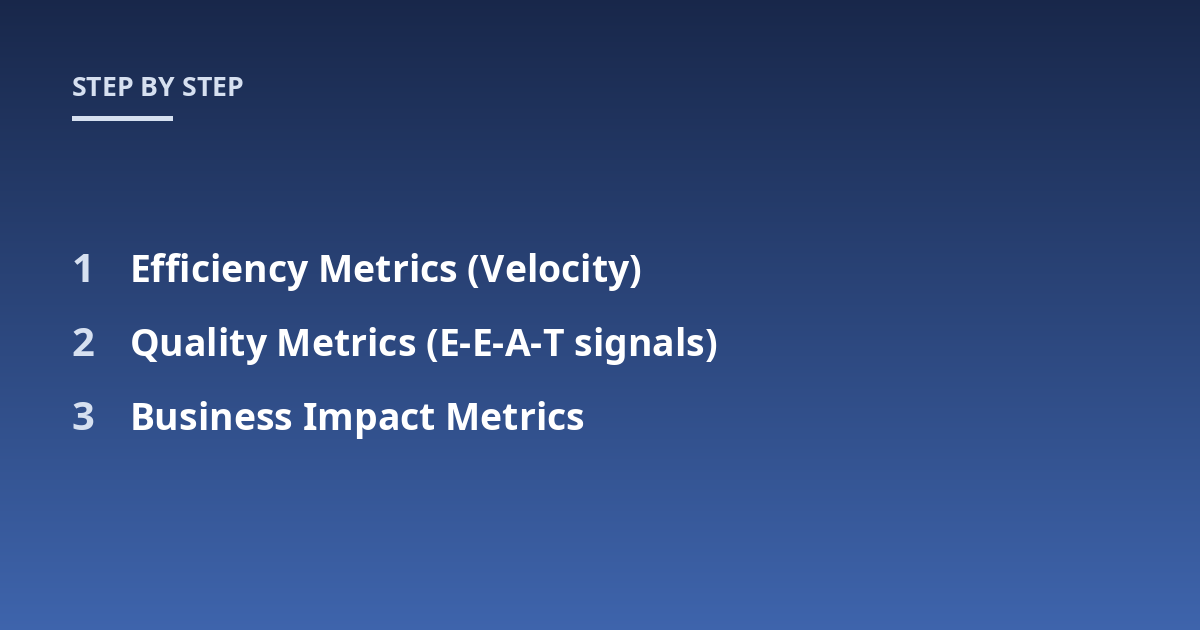
In a mature Content Ops setup, you should track three groups of metrics:
- Efficiency Metrics (Velocity): Measures how quickly and reliably content moves from brief conception to publication. Track time saved per article using AI vs. manual methods.
- Quality Metrics (E-E-A-T signals): Tracks user behavior indicating trust and expertise, such as low bounce rates on complex guides, high consumption of specific structured data blocks, or direct clicks leading to transactional pages.
- Business Impact Metrics: This includes how often content is sourced by a client for a sales query, or measurable increases in organic leads from highly technical landing pages (e.g., those requiring international qualification).
For instance, instead of optimizing only for “How many views?”, measure the number of second page interactions on a resource hub, indicating that users are finding enough value to explore related topics.
Measuring AI’s Contribution
When measuring the impact of generative AI, treat it as an efficiency layer (reducing effort), not a performance guarantee. A good benchmark is tracking content velocity improvements: Did your team publish 40% more unique pieces of long-form content this quarter compared to the last, while maintaining or improving average organic rankings? That’s measurable success.
How should we govern AI content creation to maintain brand authority?
The biggest risk in adopting automated workflows is generating “AI noise”, high volume, low signal. To prevent your site from being perceived as spammy or generic, you must establish strict governance rules centered on factual accuracy and unique human insight.
The Three Pillars of Content Governance
- Factual Verification Mandate: Assume everything AI produces is a draft hypothesis, not fact. Every claim (especially statistics, dates, and industry regulations) must be cross-referenced with at least two independent, high-authority sources.
- The ‘So What?’ Test: After an AI generates a paragraph, ask your content strategist: “So what? Why should the reader care about this specific piece of information?” If the answer isn’t compelling and actionable, remove or rewrite the text with human experience.
- Maintaining Voice Consistency: Implement a detailed style guide that specifies not just tone (professional, witty, formal), but also approved technical phrasing, acronym definitions, and acceptable jargon for your niche. This prevents the content from sounding like it came from a generic LLM prompt rather than an expert practitioner in Dubai or Toronto.
What we’ve found is that injecting local context, mentioning specific service steps taken within a city, or referencing unique regulatory bodies in Vietnam or Germany, is one of the most effective ways to ground content and solidify E-E-A-T signals.
Case study: How we boosted organic traffic by 200% with AI-powered content helps automate aspects like multilingual campaigns, but it can’t replace the nuance needed for true local SEO optimization.
What mistakes should SEO teams avoid when using generative AI?
Adopting AI without process maturity leads to predictable, costly errors. Knowing these pitfalls helps you implement content ops in a way that truly boosts authority rather than decreasing trust.
Avoid Over-Reliance on Uncited Data
If the prompt requires data from a specific year or statistic (e.g., “Cite a 2023 report on global e-commerce trends”), never accept the AI’s citation at face value. The model might fabricate that source, leading to misinformation and brand damage. Always demand the primary source URL or name of the reporting body.
Don’t Mistake Speed for Depth
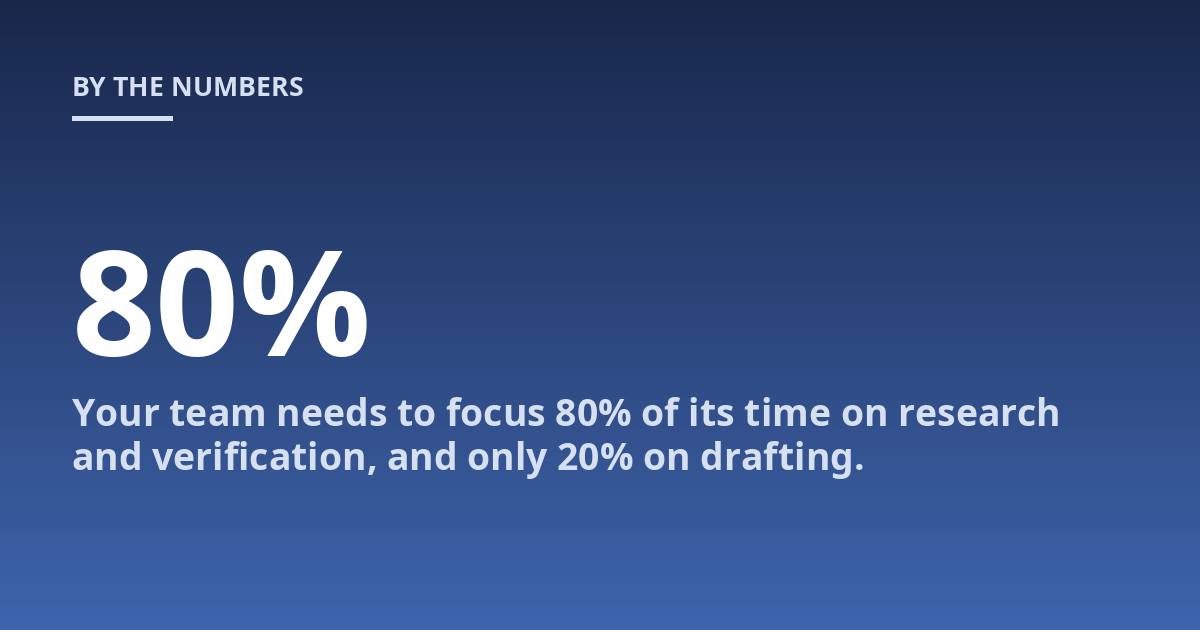
This is perhaps the most common error: assuming that because content was generated quickly, it must be good. Quality SEO always requires deep thought; generative AI only accelerates the *writing* part. Your team needs to focus 80% of its time on research and verification, and only 20% on drafting.
Ignoring Technical Infrastructure
Content Ops failure is often a technical one. Don’t forget that even perfect copy fails if your site isn’t technically sound. Are your internal link structures updated? Is the schema correct for the page type? Ignoring foundational SEO tasks because “great content” can nullify all efforts.
How often should Content Ops workflows be reviewed by the team?
Content operations strategies are not static. They change immediately when Google updates its guidelines or when a major competitor deploys a new technical feature. The most reliable schedule is after any significant platform update (Google Core Update, major LLM release) and at least once every quarter for process audit.
Ultimately, the goal of Content Ops is not just efficiency; it’s creating an adaptable system that can absorb external technological changes while guaranteeing human oversight remains paramount.
Frequently Asked Questions (FAQ)
What general principles guide effective content operations in AI workflows?
Effective content operations revolve around systematizing the entire publishing lifecycle, ensuring consistency and scalability. The core principle involves moving from ad-hoc article writing to structured topic clusters. This means defining clear editorial guidelines for every piece of content, knowing which tools automate repetitive tasks (like generating metadata), and mandating human sign-off on all factual claims before publication.
When should an SEO team consult a professional regarding AI workflow implementation?
You should seek consultation when your team experiences internal pain points: inconsistency in tone across content, measurable dip in organic traffic that isn’t tied to known algorithm changes, or confusion about how to structure data for new generative search results. Early assessment helps prevent small process flaws from escalating into significant visibility damage.
How should we prepare before reviewing our current AI content workflow processes?
Preparation means gathering concrete evidence of your current system: a list of all tools used (AI, CMS, SEO), the average time spent on different stages (research, writing, editing), and quantifiable examples of failed or confusingly structured articles. Providing existing process documentation allows experts to pinpoint specific choke points in your workflow before suggesting improvements.
What are the primary risks associated with relying too heavily on AI content generation?
The main risks involve hallucination (making up facts, dates, and sources), diluting brand voice, and generating thin, unoriginal content that search engines quickly identify. Another risk is losing human context, the subtle nuance or highly niche local knowledge only an experienced professional possesses. Governance must mitigate this constant factual drift.
How frequently should Content Ops guidelines be updated to keep pace with AI technology?
The guidelines need continuous monitoring, particularly after major platform updates by Google (e.g., E-E-A-T adjustments) or significant releases from generative models. A minimum review cycle of every quarter is necessary for a mature team. However, if your primary content source changes, like moving into video marketing or complex transactional guides, the process must be updated immediately.
Next steps for streamlining Content Ops
To improve your operational foundation now, start by mapping a single content piece from concept to publication. Identify every manual handoff point (the “pain points”) and treat those as immediate automation opportunities, be it using programmatic SEO tools or establishing multilingual content protocols. Focus on proving efficiency gains in one pillar cluster first.
If your needs include advanced AI-driven processes like multi-lingual campaigns or structured data integration, exploring dedicated Content Ops tooling can significantly accelerate these efforts // Note: In a real HTML output, the above external link would be styled correctly and wouldn’t need a script tag.
Other posts from the category
There are no posts for the selected category.

Latest posts from the category
-

What makes an effective Category Page for AI
June 5, 2026
-

What Influences the cost of AI Optimisation
June 1, 2026
-

Organisation Schema: how to help AI understand your brand
May 27, 2026