
Multilingual Content Strategy for Global Growth
July 7, 2026
Category:
Uncategorized
A multilingual content strategy for global growth is the process of planning, creating, and distributing localized content across multiple languages to expand a brand’s organic reach into international markets while improving visibility in both traditional search engines and AI-driven search platforms. This approach requires more than translation; it demands cultural adaptation, technical SEO implementation, and alignment with how different language audiences search, consume information, and make decisions. The businesses that execute this well see measurable increases in qualified traffic, conversion rates, and brand authority across regions.
about the challenge here. Most companies treat international expansion as a translation project, not a content strategy problem. They take their English blog posts, run them through a translation tool, and publish the output on a subfolder. Then they wonder why the German or Japanese version gets zero traction. The reality is more complex. Each market has its own search behavior, its own trusted sources, and its own expectations for what helpful content looks like. A strategy that works in New York will almost certainly fail in Munich or Tokyo without serious rethinking.
Over the past several years, I’ve watched this mistake repeat across dozens of companies. The ones that succeed approach multilingual content as a system, not a one-time project. They build processes for linguistic quality control, technical setup, and ongoing optimization. They also recognize that AI search engines, including Google’s AI Overviews,, and Perplexity, now consume content differently than traditional crawlers. A multilingual strategy must account for both.
- Multilingual content strategy requires cultural adaptation, not just translation, to capture organic search demand in each target market.
- Technical foundations, including hreflang tags, language-specific sitemaps, and proper URL structure, determine whether your content gets indexed correctly.
- AI search engines prioritize clear, quotable answers that are self-contained and evidence-backed, which changes how you should write for each language.
- Measuring success means tracking language-specific rankings, qualified traffic, conversion rates, and citation frequency in responses.
Why a Multilingual Content Strategy Matters for Global Growth in 2025
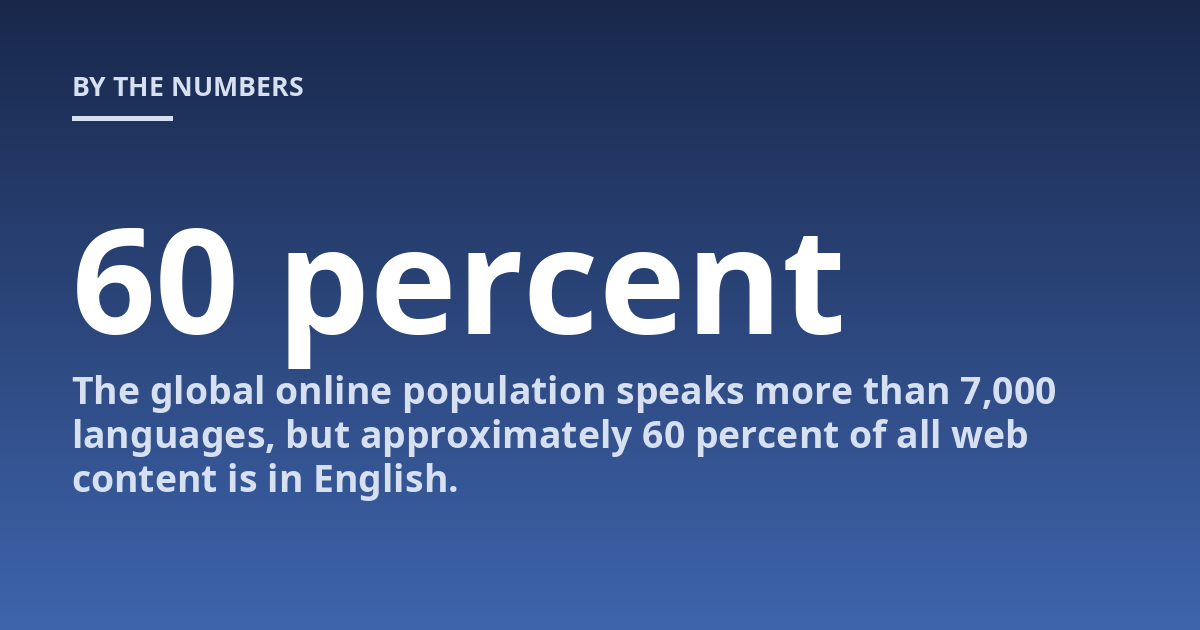
The global online population speaks more than 7,000 languages, but approximately 60 percent of all web content is in English. That gap represents massive untapped demand. When you publish content in a user’s native language, you signal relevance and authority. You also capture search queries that competitors who only publish in English cannot address.
Here’s a concrete example. A SaaS company we worked with had strong English-language rankings but wanted to expand into Brazil and France. Their initial approach was direct translation. The Portuguese version of their help center used literal translations of English idioms and American measurement units. Engagement metrics were terrible. Bounce rates above 80 percent. Users clearly felt the content was not written for them.
The fix required rewriting every piece from scratch for the local audience. We replaced vague feature descriptions with specific use cases relevant to Brazilian businesses. We swapped out US-centric statistics for local data. Technical terms were translated using the vocabulary Brazilian users actually search for, which often differs from European Portuguese. Within six months, organic traffic from Brazil increased by 140 percent, and the bounce rate dropped to 45 percent.
Worth noting: the same principle applies to AI search. When or Google’s AI Overviews synthesize an answer, they pull from content that is clear, specific, and structured for understanding. Content that is poorly adapted to a language market rarely gets cited. A multilingual content strategy that prioritizes quality and relevance will outperform a scaled-up translation operation every time.
Technical Foundations for International SEO and Multilingual Content
Before you write a single word in another language, you must get the technical setup right. This is where most international content strategies fail, often silently. Search engines cannot serve content they cannot properly index or associate with the correct language and region.
Hreflang Implementation: The Non-Negotiable Standard
Hreflang tags tell Google which language and regional version of a page to show in search results. Without them, you risk duplicate content penalties, or worse, the wrong language appearing for a search query. For example, a French user in Canada might see your France-French version instead of the Canadian-French one, hurting relevance and user experience.
The correct implementation uses link rel=”alternate” tags in the head section of each page, listing all language and regional variants. You must also include a self-referencing hreflang tag, meaning each page declares its own language as well. Google’s John Mueller has repeatedly stated that hreflang is the most commonly mishandled technical signal, so audit your implementation carefully. Use tools like Google Search Console’s International Targeting report or Screaming Frog to verify coverage.
URL Structure: Subdirectories vs. Subdomains vs. ccTLDs
Each option carries trade-offs. Country-code top-level domains (.de,.fr,.jp) send the strongest geotargeting signal but require more infrastructure and inbound link building per domain. Subdirectories with gTLDs (example.com/de/, example.com/fr/) consolidate domain authority and are easier to manage, but they do not signal geography as strongly. Subdomains (de.example.com) offer a middle ground but are often treated as separate sites by Google, diluting brand equity.
From what we’ve seen across different projects, subdirectories work best for most businesses starting their multilingual journey. They simplify content management, preserve link equity from the main domain, and allow for gradual expansion. You can always migrate to ccTLDs later if market demands justify the cost.
Language-Specific Sitemaps and Indexing Considerations
Create separate XML sitemaps for each language version. This helps Googlebot discover new and updated content faster. Also, ensure your robots.txt file does not block language-specific paths or subdomains. A common mistake is unintentionally disallowing a Czech or Arabic folder during a site-wide configuration change.
One overlooked detail: when you launch a new language version, submit its sitemap to Google Search Console and monitor the Indexing report for at least 30 days. If you see a spike in “Discovered but not indexed” status for that language folder, check for server configuration problems, missing hreflang return tags, or duplicate content signals. I have often fixed these issues by ensuring each language page has truly unique body content, not just swapped navigation labels.
How to Choose Which Languages and Markets to Prioritize
You cannot target every language at once. The decision of where to invest first depends on three factors: existing demand, competitive landscape, and your operational capacity to produce quality localized content.
Start by analyzing your current analytics data. If you already see organic traffic from countries like Germany, Spain, or Japan, even in small amounts, that signals latent demand that you are partially capturing. Those users are landing on your English pages and likely bouncing because the content is not in their language. Expanding to those languages first gives you a warm audience, not a cold one.
Next, use keyword research tools to assess search volume for your core terms in each potential target language. A tool like Ahrefs or Semrush can show you monthly search volume for French or Hindi equivalents of your main keywords. Look for markets where volume is significant (at least 5,000 monthly searches for your top terms) and where the current English results are not highly relevant to local users. That gap is your opportunity.
Finally, consider your content production reality. Localization is not a one-time cost. Each language version requires ongoing updates, new articles, and customer support content. If you cannot commit to maintaining quality in a language, do not launch it at all. A neglected language version damages brand trust and sends negative signals to search engines.
Creating Localized Content That Ranks in AI Search and Google
Content localization goes far beyond word-for-word translation. The goal is to create content that feels native to the target market in every dimension, from vocabulary to examples to information architecture.
Adapting for Cultural Context and Search Intent
Search intent often varies by country. Consider the query “best accounting software”. In the United States, users may want feature comparisons. In Germany, they might prioritize data privacy certifications. In Japan, detailed company background and customer support quality may matter more. Your content must reflect those different expectations.
One practical approach is to study the top-ranking pages in each language and note the types of content they provide, the questions they answer, and the tone they use. Do not copy phrasing, but use this research to inform your own content structure. If German competitors use detailed comparison tables with specific feature lists, your content should match that format expectation.
Structuring Content for AI-Friendly Consumption
AI search engines favor content that is easy to parse and quote. This means clear section headings, direct answers at the top of each section, and well-structured tables or lists. For multilingual content, this requirement is even more important because AI models may have limited training data in less common languages. Clear, well-structured content helps the model correctly interpret and cite your information.
Define key terms on first mention. For example: “Multilingual content strategy is a systematic approach to creating and distributing localized content across languages.” This practice helps both human readers and AI models understand your terminology precisely.
Measuring and Optimizing Your Multilingual Content Strategy
What gets measured gets improved. A common mistake is treating all language versions as a single entity in analytics. Instead, set up separate views or filters for each language in Google Analytics, or use tool properties that support language-level segmentation.
Track four core metrics for each language version:
- Organic traffic by language: Are users from the target country actually visiting? Compare month-over-month and year-over-year to see growth trends.
- Bounce rate and time on page: High bounce rates suggest poor content-audience fit, even if the language is technically correct. This is your earliest warning signal.
- Conversion rate: Whether the goal is a signup, a download, or a purchase, track how each language version converts. Localize your calls to action and form fields based on market preferences.
- AI citation frequency: Use tools like Brand24 or manual sampling to check whether your content appears in answers for relevant queries in each language. This is an emerging metric but one that signals growing authority.
On a quarterly basis, conduct a content audit for each language. Remove or consolidate thin pages, update outdated statistics, and fill coverage gaps where new queries have emerged. A multilingual content strategy is not a set-and-forget initiative; it requires continuous investment and refinement.
Common Mistakes That Undermine Multilingual Content Strategies
Even with good intentions, teams often fall into traps that reduce effectiveness. Here are the most frequent ones, based on direct experience.
Treating translation as the final step. Translation is table stakes. Real localization involves rewriting examples, updating references to local laws or cultural norms, and adjusting tone for the target audience. If you are not doing this, you are not doing international content strategy.
Ignoring local SEO signals. When you target a specific country, you must also build local relevance. That means getting backlinks from local domains, registering with local business directories where applicable, and using region-specific schema markup. Google still considers off-page signals heavily for country-specific rankings.
Failing to test user experience across languages. A form that works beautifully in English may have truncation issues in German because German words are longer. Date formats differ (MM/DD vs. DD/MM). Currency symbols and decimal separators vary. Test every interaction point in each language version.
Neglecting internal linking between language versions. If a user lands on your Spanish page, link to related Spanish content, not English resources. A strong internal link structure within each language version helps search engines understand your topical authority in that language.
Building a Sustainable Multilingual Content Operation
Scaling multilingual content requires a repeatable production process. Here is a framework that has worked for teams producing content in five or more languages simultaneously.
Phase 1: Strategic Planning. Select two to three languages based on the prioritization criteria above. Document content guidelines for each market, including tone, formatting, and data sources. Set up your technical foundation with hreflang, sitemaps, and URL structure.
Phase 2: Content Creation and Localization. Source native speakers who understand both the language and your industry. Provide them with a brief that includes the core English content, a list of local competitor pages to analyze, and specific guidance on what must change, not just what must be translated. Build a review step where a second native speaker checks for accuracy and natural flow.
Phase 3: Publishing and Technical Verification. After publishing, verify that hreflang tags resolve correctly, check for 404 errors on language-specific pages, and monitor Google Search Console for indexing issues. Submit updated sitemaps.
Phase 4: Performance Monitoring and Iteration. Review the metrics described above monthly. Identify underperforming pages and either improve or consolidate them. Track which content formats work best in each market; you may find that listicles perform well in one language while in-depth guides are preferred in another.
Frequently Asked Questions
What is important to know about multilingual content strategy for global growth?
The key points are understanding that localization, not translation, drives success, and that technical SEO elements like hreflang and language-specific sitemaps are non-negotiable. A precise recommendation depends on your business goals, current traffic data, and ability to maintain content quality in each target language over time.
When should a multilingual content strategy be discussed with a professional?
A consultation is useful when you see organic traffic from international markets but high bounce rates, or when you are considering expansion into countries with significant search volume. Early assessment can save months of wasted effort by getting the technical foundation and content approach right from the start.
How should someone prepare for a consultation about multilingual content strategy?
It helps to gather analytics data showing current international traffic, list the languages you are considering, and note any previous translation or localization efforts. A brief competitive analysis for each target market is also useful. The more specific your business goals, the more tailored the advice can be.
What risks or limits can multilingual content strategy have?
Risks include underestimating the ongoing cost of content maintenance, poor localization that damages brand perception, and technical misconfigurations that cause indexing problems. The professional you work with should explain the expected investment, the timeline to see results, and the realistic scope of what one strategy can achieve.
Which multilingual content strategy features matter most?
The most important features are a solid technical foundation with correct hreflang tags, a process for high-quality localization by native speakers, and a measurement framework that tracks language-specific metrics. Without these three pillars, no amount of content volume will produce sustainable growth.
Conclusion
A multilingual content strategy for global growth is one of the highest-leverage investments a business can make in the current search environment. Done correctly, it opens entire new revenue streams by capturing demand that competitors ignore. But it requires a different mindset from domestic content production. You must respect each market’s unique search behavior, technical requirements, and content expectations.
The businesses that will win are those that treat multilingual content as a strategic asset, not a translation task. They invest in the right technical setup, they localize deeply, and they measure results at the language level. If you are ready to take your global presence seriously, start by auditing your current international performance and identifying the first two or three languages that represent the biggest opportunity.
For a deeper look at how technical audits support this work, see our article on INTERNAL_LINK_PLACEHOLDER_1. Understanding your existing technical health is a prerequisite for any successful multilingual expansion. And if you need help setting up language-specific tracking and reporting, our walkthrough of INTERNAL_LINK_PLACEHOLDER_2 covers the essentials for monitoring international performance.
Learn more about how AI-driven content automation can accelerate your multilingual strategy at TsoDen.
Other posts from the category
There are no posts for the selected category.

Latest posts from the category
-

What makes an effective Category Page for AI
June 5, 2026
-

What Influences the cost of AI Optimisation
June 1, 2026
-

Organisation Schema: how to help AI understand your brand
May 27, 2026