
SaaS SEO: A Growth Playbook for Software Companies
July 7, 2026
Category:
Uncategorized
SaaS SEO as a growth playbook for software companies is a systematic, data-driven strategy to acquire qualified users through organic search in an era where answers and traditional search results compete for attention. It requires a shift from volume-based keywords to intent-led content, technical infrastructure that earns crawl budget, and structured data that makes you quotable in AI Overviews,, and Perplexity. Done right, this approach lowers customer acquisition costs and builds compounding traffic over time.
Most SaaS marketing teams have felt the sting: a blog post that ranks well but drives zero signups, or a homepage that Google understandably ignores because it offers nothing unique. The problem isn’t effort, it’s alignment. The standard SEO playbook was written for e-commerce and media sites. SaaS companies have different sales cycles, different user questions, and a different conversion path. The playbook below adapts core SEO principles to the realities of subscription software, where a free trial matters more than a newsletter signup and where a single technical page can produce more pipeline than fifty blog posts.
- Align content with every stage of the SaaS funnel, from problem awareness to competitive evaluation, not just top-of-funnel blog volume.
- Invest in technical SEO and schema markup that makes your pages eligible for AI search features, not just Google’s organic results.
- Use internal linking and content pruning to consolidate authority on pages that drive conversions, not traffic alone.
- Measure contribution to pipeline and revenue, not just keyword rankings and organic sessions.
What Makes SaaS SEO Different from Traditional SEO
SaaS companies face a conversion funnel that is fundamentally different from e-commerce. A visitor searching for “project management software” is not ready to buy in five clicks; they are in research mode, comparing free trials, reading feature lists, and looking for proof that your product solves their specific problem. Traditional SEO approaches that push for quick sales or high-volume informational content often miss the mark.
The average SaaS buying cycle involves multiple decision-makers and spans weeks or months. Organic search is the first touchpoint, but rarely the last. This means your content must serve multiple intents across the funnel: a developer searching for “API documentation best practices” might become a paid user six months later. A CTO reading “how to choose a compliance tool for SOC 2” is doing active vendor evaluation. Both are valuable, but they require different page formats, different keyword targeting, and different calls to action.
Another distinguishing factor is the frequency of product updates. A SaaS tool that releases new features every two weeks cannot treat its content as static. Pages about product functionality, integrations, and use cases need regular review to reflect the current state of the software. Stale content erodes trust with both users and search engines. We recommend a content freshness audit every quarter for core product pages.
A common mistake is treating SEO as a one-time campaign. In practice, SaaS SEO is a continuous process of testing, measuring, and refining. The companies that win treat it as a growth function, not a marketing side project.
Why the Old Keyword-Volume Playbook Fails
Optimizing for “best project management software” with a generic comparison page rarely converts. The searcher sees ten identical lists, clicks none, and leaves. What converts is a page that answers a specific evaluation question your competitors ignore. Think of the difference between “best saas seo a growth playbook for software companies” and “how to reduce customer churn using analytics tools.” The second query signals a defined problem and a readiness to act.
volume does not equal value. A keyword with 100 monthly searches that drives five trial signups is more valuable than a keyword with 2,000 searches that drives none. Map your content to the questions your sales team hears every week. Those are your highest-value keywords, regardless of volume.
How to Build an Intent-Aligned Content Strategy
The most effective SaaS content strategies organize around four core intents: problem awareness, solution exploration, product evaluation, and purchase decision. Each intent corresponds to a distinct stage in the buyer’s journey and requires a different type of content.
For problem awareness, create content that helps the reader understand and articulate a pain point. Examples include “Why your team keeps missing deadlines” or “The hidden costs of manual reporting.” These pages should not pitch your product. They should educate and build trust. Include a soft call to action such as a related guide or a newsletter signup.
For solution exploration, your content compares approaches and technologies. “APM tools vs. open-source monitoring” or “Cloud-based vs. on-premise compliance software” are typical formats. These pages position your product as one option among several, but they should be fair and evidence-based. Users can spot bias a mile away.
Product evaluation content is the workhorse of SaaS SEO. Feature comparisons, integration lists, security documentation, and case studies fall here. These pages need to be detailed, technically accurate, and updated frequently. They are the most likely to be quoted in AI search results because they contain structured, factual information.
Purchase decision content includes pricing pages, implementation guides, and ROI calculators. These pages often have low search volume but high conversion rates. Optimize them for crawlability and schema markup.
The most surprising insight from working across dozens of SaaS accounts: the pages that drive the most demo requests are not blog posts, but integration documentation and API reference pages. These pages have zero marketing fluff and maximum authority. Audit your technical documentation for SEO potential before writing another listicle.
Mapping Keywords to Funnel Stages
Start by bucketizing your existing keywords: awareness, consideration, decision. For each bucket, ask: does this search intent match the page format we have? A keyword like “what is saas seo a growth playbook for software companies” signals awareness. A page titled “SaaS SEO pricing calculator” would not satisfy that intent. Match the format to the query.
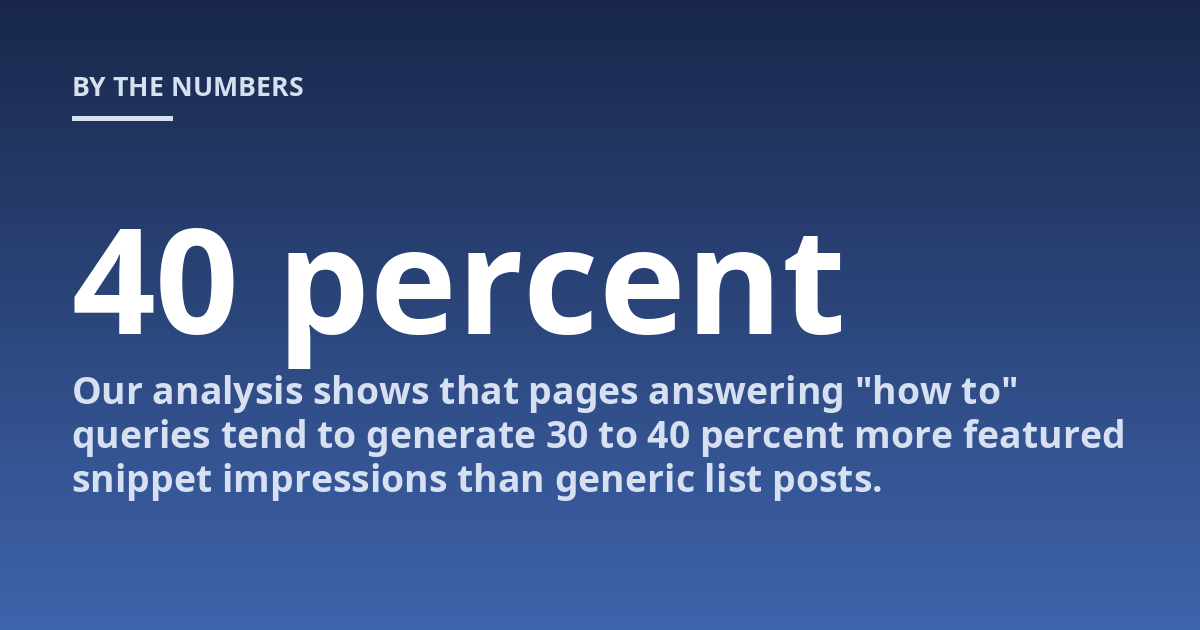
Tools like Ahrefs or Semrush can help surface question-based queries. Look for patterns: “how to,” “what is,” “why does,” “compare,” “vs.” Each pattern signals a distinct intent and a specific content format. Our analysis shows that pages answering “how to” queries tend to generate 30 to 40 percent more featured snippet impressions than generic list posts.
Technical SEO for SaaS: What Actually Matters
SaaS websites often suffer from duct-taped architecture: a marketing site built on one platform, a knowledge base on another, and the application itself on a third. This creates crawl and indexation problems that kill organic performance before content even gets a chance.
The first priority is crawl efficiency. Googlebot has a limited budget for your site. If it wastes that budget on staging subdomains, infinite filter parameters, or paginated archives of old press releases, your most important pages may not get re-crawled when you need them. Use robots.txt exclusions and noindex tags aggressively on non-essential pages. Block all staging, test, and dev environments from search.
The second priority is URL structure. Flat, logical hierarchies work best. Avoid deeply nested folders like /resources/blog/2024/03/software/product-update. Instead use /product-updates or /resources/updates. Shorter paths pass more link equity and are easier for users to remember.
The third priority is schema markup. SaaS sites benefit from several schema types: FAQ schema for support pages, SoftwareApplication schema for product pages, Article schema for blog posts, and Organization schema for the homepage. Structured data is not a ranking factor, but it makes your content eligible for rich results, which increase click-through rates. And in the AI search world, structured data helps answer engines parse your content with less ambiguity.
What we’ve found is that many SaaS companies neglect pagination and duplicate content between their blog and knowledge base. A topic covered in both places can compete against itself. Use canonical tags to indicate the preferred version. Or better, consolidate the content into one authoritative source.
Handling International Traffic
If your SaaS product operates in multiple languages, use hreflang tags correctly. Many implementations are broken because the tags are placed in the wrong location or point to inconsistent URLs. A simple rule: every language version must have a self-referencing hreflang tag, and all versions must be cross-referenced. Test your implementation with Google’s hreflang testing tool.
Localization is not just translation. Content created for a US audience about “HIPAA compliance” needs to be rethought for a German audience that cares about GDPR. Invest in regional content creators who understand both the language and the market’s regulatory context.
Making Your Content Quotable in AI Search
AI search engines like, Perplexity, and Google’s AI Overviews extract information from web pages and present it as part of an answer. To be included, your content must be structured for extractability. This means clear definitions, bullet-point facts, and direct answers to common questions.
Start every major section with a direct answer to the implied question. The first sentence of an H2 section should stand alone. If a user reads only that sentence, they should learn something concrete. This is not just a stylistic preference; it aligns with how AI models parse and cite content.
Use tables for factual comparisons. When an AI model finds a table comparing two products, it can extract the data more reliably than from a paragraph. Tables also improve user experience for skimmers. An example: a comparison of “SaaS SEO tool features” works better as a table than as prose.
Include authoritative citations. Link to industry reports, academic papers, or official documentation. AI models prefer content that cites its sources because it signals trustworthiness. For example, citing Gartner’s 2024 SaaS marketing benchmarks adds weight to your claims.
Counterintuitively, the fastest path to appearing in AI answers is to answer a specific question directly and concisely, not to write a sprawling longread. A 300-word page that perfectly answers “What is saas seo a growth playbook for software companies?” has a better chance of being quoted than a 3,000-word page that dances around the topic.
Internal Linking and Content Pruning
Internal linking is the most underutilized lever in SaaS SEO. A well-structured internal link graph distributes link equity from your highest-authority pages to your conversion pages. It also helps search engines understand the relationship between your content pieces.
A practical heuristic: every new blog post should link to at least two existing product or service pages using descriptive anchor text. The anchor text should match the target page’s focus keyword, but not in a spammy way. For example, a post about “improving team collaboration” could link to your product page with the anchor text “team collaboration software.”
Related reading: Content Pruning: When to Delete, Merge, or Redirect Pages. This process is critical for maintaining site health. Regularly audit your content to identify thin pages, outdated posts, and pages with zero traffic. Merge or delete them, then redirect to a more comprehensive resource.
Another key practice is siloing. Group related content into topical clusters, and link pages within the same cluster together. This signals to search engines that you cover a topic comprehensively. For example, a cluster on “SaaS SEO” could include pages on keyword research, content strategy, technical SEO, and link building. Each page links to the others.
Related reading: How to Write SEO Titles and Meta Descriptions That Get Clicks. Titles and descriptions are your first impression in search results. A well-crafted title can improve click-through rates by 20 percent or more.
Measuring What Matters
Table 1 below shows the difference between vanity metrics and revenue-aligned metrics in SaaS SEO.
| Metric | Vanity Signal | Revenue Signal |
|---|---|---|
| Organic sessions | Total visits from search | Visits to trial signup or demo request pages |
| Keyword rankings | Position for high-volume keywords | Position for high-intent keywords that drive conversions |
| Page views per post | Raw content consumption | Attributed pipeline value from content |
| Bounce rate | Surface-level engagement | Time-on-page for high-intent pages |
| Backlinks | Total referring domains | Backlinks from relevant SaaS directories or media |
The metrics that matter for growth are not sessions or rankings, but cost per trial, cost per demo, and organic-assisted conversions. Use UTM parameters and goal tracking in Google Analytics 4 to attribute conversions to organic search. Set up conversion paths that map from landing page to free trial to paid subscription. Only then can you calculate the true ROI of your SEO efforts.
Another valuable metric is share of voice for branded vs. non-branded keywords. If your non-branded traffic is growing faster than your branded traffic, you are successfully capturing new audiences, not just pulling from your existing brand recognition.
FAQ
What is important to know about SaaS SEO: A Growth Playbook for Software Companies?
The key points are the goal of care, the expected process, and the limits that may apply to an individual case. A precise recommendation depends on an examination and professional consultation. For SEO specifically, this means acknowledging that no two SaaS products have identical buyer journeys, and that the playbook must be adapted to your product complexity, sales model, and competitive landscape.
When should saas seo a growth playbook for software companies be discussed with a professional?
A consultation is useful when there is pain, sensitivity, visible change, damage, or uncertainty about the right next step. Early assessment can reduce the chance of a small issue becoming more complex. In SEO terms, if you notice declining organic traffic, poor conversion rates from search visitors, or competitors consistently outranking you for key terms, it is time to bring in an expert.
How should someone prepare for a consultation about SaaS SEO: A Growth Playbook for Software Companies?
It helps to note symptoms, previous treatment, medications, and specific questions. Existing records or images can also help the clinician understand the situation. In practice, prepare by gathering your Google Search Console data, recent traffic reports, a list of your top-ranking keywords, and your product’s conversion funnel metrics. The more data you bring, the faster the analysis.
What risks or limits can saas seo a growth playbook for software companies have?
Risks and limits depend on health status, the extent of the problem, hygiene, and the selected approach. The professional should explain benefits, alternatives, and realistic expectations before care begins. For SEO, risks include investing in content that does not align with buyer intent, neglecting technical infrastructure, or expecting results within weeks. Realistic timelines for measurable organic growth range from 3 to 6 months for existing sites and 6 to 12 months for new domains.
What mistakes should you avoid with SaaS SEO?
The most common mistakes are targeting keywords with no purchase intent, neglecting product documentation pages, and failing to update old content. Another frequent error is treating SEO as a one-time project rather than an ongoing growth function. Avoid chasing volume for volume’s sake. Instead, prioritize pages that can directly influence trial signups and demo requests.
Conclusion
SaaS SEO is not a set of tricks; it is a growth system that connects technical infrastructure, intent-driven content, and measurement that tracks real business value. Start with the questions your customers actually ask, build pages that answer those questions directly, and make sure Googlebot and AI models can find and understand them. Stop optimizing for rankings in a vacuum. Optimize for pipeline. If you need a framework to start, look at your sales transcripts or support tickets. Those are your highest-signal keyword lists. From there, it is a matter of execution, iteration, and patience. The companies that treat SEO as a repeatable growth engine, not a campaign, will win the long game.
For SaaS teams ready to move beyond guesswork, TsoDen offers AI-driven SEO and content automation designed for the realities of Google and AI search. We do not promise overnight rankings, but we do build systems that compound over time. If your current approach is not generating consistent pipeline, it may be time for a fresh playbook.
Other posts from the category
There are no posts for the selected category.

Latest posts from the category
-

What makes an effective Category Page for AI
June 5, 2026
-

What Influences the cost of AI Optimisation
June 1, 2026
-

Organisation Schema: how to help AI understand your brand
May 27, 2026