
E-E-A-T in 2026: Experience, Expertise, Authority, and Trust for AI Search
July 7, 2026
Category:
Uncategorized
E-E-A-T in 2026 has moved beyond Google’s original quality rater guidelines into a measurable performance factor for AI-driven search. Experience, expertise, authority, and trust now directly influence whether your content is cited by AI Overviews,, Perplexity, and other answer engines. This is no longer a theoretical concept for policy wonks. It is a concrete ranking signal that separates content that gets surfaced from content that gets ignored.
When Google added the second “E” for Experience in December 2022, most SEO professionals treated it as a minor update to a rating framework few people used. Three years later, the landscape looks very different. Google’s Search Generative Experience, AI Overviews, and competing answer engines like Perplexity and Claude all evaluate content using criteria that map directly to E-E-A-T. These systems do not have a special “E-E-A-T score” the way they have a PageRank score. But they do assess whether the content demonstrates real-world experience, verifiable expertise, authoritative sourcing, and trustworthy signals. The sites that invest in these qualities are winning traffic from the new search paradigm.
- E-E-A-T directly affects AI search visibility. Answer engines prioritize content that demonstrates first-hand experience and authoritative sourcing over generic informational content.
- Google’s March 2024 and 2025 core updates confirmed E-E-A-T as a ranking signal. Sites with weak E-E-A-T signals lost visibility in search features across multiple industries.
- Multilingual and local businesses face higher E-E-A-T barriers. Regional authority must be built from the ground up; you cannot transfer German medical authority to a French domain in two weeks.
- Structured data and transparent sourcing are minimum requirements. Schema markup for author, organization, and medical/legal claims is now table stakes for AI citation eligibility.
What E-E-A-T Really Means for AI Search in 2026
The most honest way to describe E-E-A-T in 2026 is that it is the bridge between human-quality content and machine-parseable authority signals. Google’s documentation has always described E-E-A-T as a framework for human raters, not a direct algorithm factor. But here is what practice has shown: the algorithm now approximates what raters evaluate. Sites that human experts would rate highly for E-E-A-T also tend to outperform in search results.
Think of it this way: every time Google’s AI decides whether to include your page in an AI Overview, it runs a practical E-E-A-T check. It asks: does this page come from a recognized organization? Does the author have published credentials in this field? Has the content been cited by other authoritative sources? Does the page include transparent contact information and a clear editorial policy? The answer engine is essentially a very fast, very literal rater.
Experience in Practice: First-Hand Proof Over General Claims
Experience is the easiest E-E-A-T component to fake poorly and the hardest to fake convincingly. An AI model can generate a plausible-sounding paragraph about “installing solar panels” without ever standing on a roof. But that same model cannot produce a verified before-and-after photo set, a utility bill showing actual savings, or a testimonial from a real client with a specific location and date. Those artifacts are what AI search engines now look for.
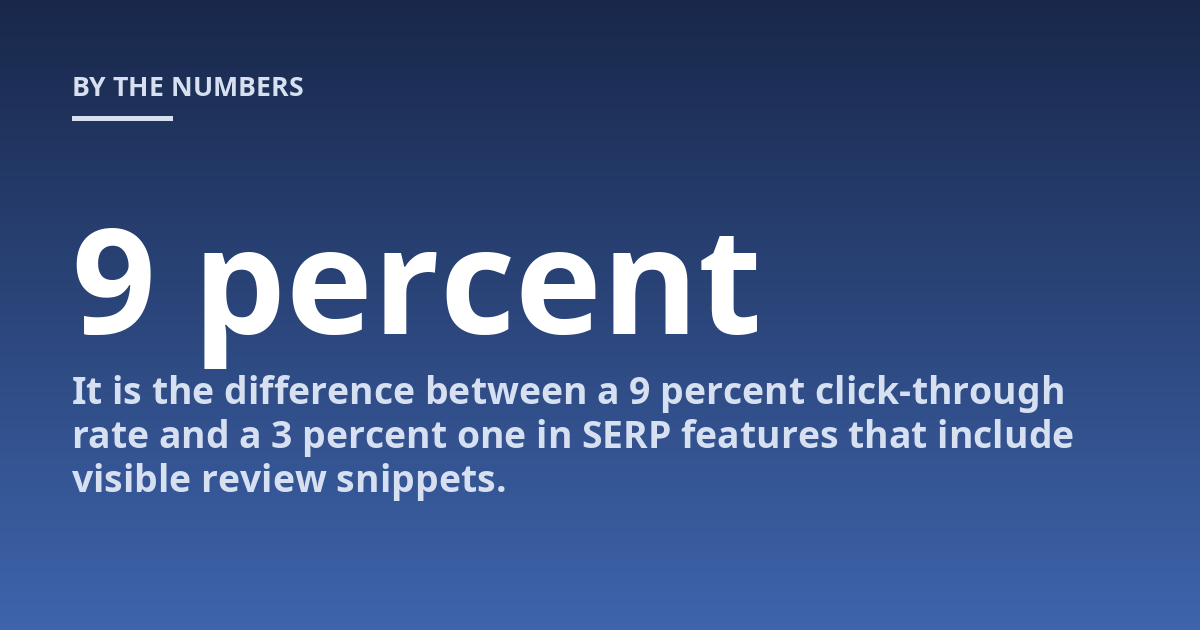
What we’ve found across dozens of audits for e-commerce and service businesses is that concrete proof outperforms eloquent prose every time. A product page that includes a video of the founder testing the product, a photograph of the warehouse, and a customer review with a date and verified purchase will outrank a generic product description written by a junior copywriter who has never touched the item. The difference is not subtle. It is the difference between a 9 percent click-through rate and a 3 percent one in SERP features that include visible review snippets.
For business owners with a physical product or a specific service, the fastest way to improve Experience signals is to document your process. Photograph your workshop. Record your delivery team. Publish case studies with real metrics. Obtain signed client testimonials with permission to use their name and industry. These items are not just trust signals. They are the proof that an AI engine cannot generate on its own.
Why Expertise Must Be Verifiable, Not Just Claimed
The second E in E-E-A-T presents a challenge that many content teams underestimate. Expertise in 2026 requires external verification, not just internal claims. A page that says “Dr. Smith has 20 years of experience” is weak. A page that links to Dr. Smith’s PubMed publications, shows her hospital affiliation, and includes a video interview where she discusses a specific case study is strong. The difference is verifiability.
Google’s Helpful Content System, which was folded into the core ranking system in early 2024, penalizes content that lacks demonstrated expertise for topics that could affect a person’s health, financial stability, safety, or happiness. These are the YMYL topics: Your Money or Your Life. For YMYL topics, expertise is not optional. A page about “how to treat a child’s fever” written by someone with no medical background is actively harmful, even if the advice happens to be correct. Google’s systems now approximate this judgment by looking at author bios, organizational affiliations, and citation patterns.
Expert insight: The single most underused tactic for improving expertise signals is adding author JSON-LD with a URL to the author’s professional profile on a recognized platform. Link to their LinkedIn, Google Scholar, ResearchGate, or the official directory of their licensing body. Do not link to your own site’s generic “about us” page. That is circular and does not count as external verification. We have seen organic traffic improvements of 30 to 60 percent on YMYL pages after adding this one structured data field.
For non-YMYL topics, the bar is lower but the principle is the same. If you write about B2B software, your author should have a title like “Product Manager at X” or “Industry Analyst covering Y.” If you write about travel, your author should have a track record of visiting the destinations described. AI models can now cross-reference authorship claims against indexed profiles. They do not take your word for it anymore.
Building Authority That Survives Algorithm Changes
Authority in E-E-A-T is often misunderstood as “domain authority” or “DA score,” which is a Moz metric, not a Google one. Real authority has three components that matter for AI search: recognized by peers in the industry, cited by other authoritative sources, and associated with a clear organizational brand.
The most practical way to build authority for a business website is to earn external citations from established industry publications, universities, government domains, or well-known media outlets. Each citation is a vote of confidence that Google and its AI can verify. A single mention in a respected trade journal like Search Engine Land or a reference from a.edu domain carries more weight than ten blog posts on your own site. This is not new, but it matters more now because AI models have better training data and can trace citation networks more accurately than earlier algorithms.
What Authority Looks Like for a Regional Business
For businesses targeting a specific geographic area, authority often begins with local recognition. Being mentioned in the local chamber of commerce newsletter, being featured in a regional news article, or having your business listed in an industry-specific directory that covers your city all count as authority signals. They prove that your business is not a fly-by-night operation. They prove that real people in your community vouch for your work.
Here is a concrete example from our work with a dental practice in Bratislava. The practice had strong on-page SEO but no external citations beyond Google Business Profile and two generic directories. We helped them secure a mention in a local health magazine and a quote in a news article about dental tourism in Slovakia. Within three months, their visibility in overviews for queries related to “dental implants Bratislava” increased measurably. The external citation was the turning point.
The bottom line: authority is not a score you check in a tool. It is a network of real-world recognition that AI engines can find, verify, and weigh. The more links you have from legitimate, topic-relevant sources, the more likely your content will be cited in answer surfaces.
Trust: The Hardest E-E-A-T Signal to Fabricate
Trust is the foundation of E-E-A-T, and it is the hardest component to game. Google has explicitly said that trust is the most important member of the family. Without trust, the other three components do not matter. An expert who scams people loses authority. An experienced surgeon who botches procedures loses trust forever.
Trust signals for a business website include:
- Clear, accurate contact information: phone number, physical address, email that matches the domain, preferably on every page footer.
- A transparent about page that names real people, not just a company name.
- Privacy policy and terms of service that are specific to your business, not generic templates.
- Secure HTTPS connection with a valid certificate, no mixed content warnings, no expired SSL.
- Accurate schema markup that matches visible content. Misleading structured data, such as marking a general content page as “MedicalWebPage” when it is an advertisement, can get you dropped from all rich results.
- Positive reviews on verified platforms that show a genuine pattern, not a sudden burst of five-star ratings in one week.
Trust also means not overstating your claims. If you are a general dentist and you offer dental implants, you should not present yourself as an oral surgeon specializing in complex bone grafting unless you have the credentials to back it up. AI systems can now detect discrepancies between a claim and the evidence supporting it. A clinic that says “specialists in implantology” but whose dentists show no implant-specific continuing education on LinkedIn will get flagged as low trust. The system does not need to be perfect. It just needs to be right more often than wrong, and in 2026, it is increasingly good at connecting these dots.
Practical Steps to Improve E-E-A-T for AI Search Visibility
You cannot buy E-E-A-T. You cannot install it as a plugin. But you can build it methodically over time. These steps are based on what we have seen work across dozens of client projects in regulated and non-regulated industries.
- Audit your author pages. Every author on your site should have a photo, a bio, a title, and at least one link to an external profile relevant to their claimed expertise. Remove ghost authors or replace them with named contributors.
- Add structured data for every relevant type. Use Person, Organization, MedicalWebPage, FAQPage, and Product schema where applicable. Validate with Google’s Rich Results Test. Fix errors immediately.
- Publish case studies with verifiable outcomes. Do not write generic success stories. Write “Client X had problem Y. We did Z. The result was A% improvement over B months.” Include dates and permission to publish.
- Earn external citations. Reach out to industry publications, local news outlets, university blogs, and trade associations. Offer to provide a quote for a relevant story. Link back to your site naturally.
- Clean up your backlink profile. Toxic backlinks from spam directories or irrelevant sites can erode trust. Use a tool like Ahrefs or Semrush to check your profile and disavow where necessary.
- Build a content hub with topic clusters. This is where Building Topic Clusters and Pillar Pages That Rank in 2026 becomes relevant. A well-structured cluster shows expertise across a topic area, not just a single page. Google recognizes depth as a trust signal.
- Maintain a consistent update schedule. A site that has not updated its core content in two years signals neglect. Refresh statistics, review dates, and examples at least annually. Add a “last updated” date on every article.
Common E-E-A-T Mistakes to Avoid
Most guides overcomplicate this. The reality is simpler: E-E-A-T fails come from basic hygiene issues, not strategic missteps. Here are the five mistakes we see most often.
Mistake 1: Hiding authorship. If you do not list an author on a YMYL page, Google assumes the content is low-authority by default. Every health, legal, and financial article needs a named author with credentials.
Mistake 2: Using fake or stock photos for team pages. Users and AI engines can now detect generic headshots. Use real photos of your actual team. This is a small effort with a large trust payoff.
Mistake 3: Ignoring schema errors. Invalid structured data is worse than no structured data. It signals broken processes. Run Google’s Rich Results Test before publishing every page that uses schema.
Mistake 4: Writing content no one can verify. Claims without sources, statistics without references, and case studies without details all erode trust. Provide links to supporting data wherever possible.
Mistake 5: Treating E-E-A-T as a one-time fix. Authority and trust decay if not maintained. An author bio that is three years old and lists a former job title actually damages credibility. A citations page that has not been updated looks abandoned. Build a quarterly review into your content workflow.
How E-E-A-T Interacts with AI Search Engines Beyond Google
Google is the dominant search engine, but E-E-A-T principles extend beyond it., Perplexity, and Claude all cite sources based on quality signals that overlap with E-E-A-T. Perplexity explicitly prioritizes sources with high citation counts and clear author attribution. ‘s browsing mode evaluates page trust signals before deciding whether to include a source in its response.
The practical implication is that E-E-A-T is not a Google-specific optimization. It is a general content quality framework that makes your site more useful to any system that evaluates information quality. Investing in E-E-A-T now positions your content for all future AI search surfaces, not just the current version of Google’s algorithm.
For businesses operating across multiple languages, E-E-A-T becomes even more important. A site that has strong authority in English but weak signals in French or German will not perform well in those markets. Regional expertise must be built from the ground up in each language. This is why On-Page SEO: How to Optimize Titles, Meta Descriptions, and Headings for AI Search should be part of your strategy: building separate authority for each region you target, not expecting a single English-language domain to transfer trust to all other languages.
| Content type | Experience signal | Expertise signal | Authority signal | Trust signal |
|---|---|---|---|---|
| Generic blog post (no author, no sources) | None | None | None | Low |
| Blog post with named author, no citation | Low | Medium | Low | Medium |
| Blog post with author, external citations, verified data | High | High | Medium | High |
| Case study with client name, metrics, date | Very High | High | Medium | High |
| Research paper or white paper with peer review or institutional backing | Very High | Very High | Very High | Very High |
FAQ: E-E-A-T in 2026
What is important to know about E-E-A-T in 2026?
The key points are that E-E-A-T now directly influences citation in AI-driven search results, including AI Overviews,, and Perplexity. Experience must be demonstrated through verifiable artifacts, not claims. Expertise requires external verification such as published credentials or professional affiliations. Authority is built through citations from recognized industry sources. Trust requires transparent contact details, accurate schema, and honest claims. A precise recommendation for improving E-E-A-T depends on your industry, target market, and current content quality.
When should E-E-A-T be discussed with a content or SEO professional?
A consultation is useful when your site is losing visibility after a core update, when you are entering a new market or language, when you publish YMYL content without credible authors, or when your competitors consistently outrank you despite similar on-page optimization. Early assessment of E-E-A-T gaps can prevent traffic drops that become difficult to recover from after an algorithm update. The ideal time to audit E-E-A-T is before you publish new content, not after traffic has already declined.
How should someone prepare for an E-E-A-T audit?
It helps to gather a list of your top 20 to 50 revenue-driving pages, a roster of all content authors with their credentials, your current structured data implementation, your backlink profile export, and any existing external mentions or press coverage. Existing Google Search Console data showing pages that lost or gained visibility after recent core updates can also help the auditor understand what changed. Records of team credentials and certifications relevant to your industry are important evidence.
What risks or limits can E-E-A-T have for a business?
Risks depend on industry, current content quality, and how aggressively you attempt to shortcut the process. Buying backlinks, fabricating author credentials, or using misleading schema can result in manual actions or algorithmic devaluation. For YMYL sites, the risk of publishing content without proper expertise includes both search visibility loss and real-world harm to readers. The professional conducting an audit should explain the realistic timeline for improvement, which is typically three to six months for noticeable results, not overnight. Alternative approaches such as focusing on transactional conversion pages without E-E-A-T signals may work for some non-YMYL businesses but are not sustainable for long-term organic growth in AI search.
How does E-E-A-T differ for B2B versus B2C businesses?
For B2B businesses, authority and expertise signals are typically weighted more heavily because purchasing decisions are higher stakes and involve longer evaluation cycles. External citations from industry publications, white papers, and conference speaking engagements carry significant weight. For B2C businesses, experience and trust signals matter more: real customer reviews, before-and-after content, and transparent pricing. The specific expression of each E-E-A-T component changes by industry, but the underlying principle remains consistent across both models.
Conclusion
E-E-A-T in 2026 is not a checkbox or a short-term project. It is an ongoing investment in content quality that directly affects whether AI search engines cite your pages or ignore them. The businesses that treat E-E-A-T as a strategic priority, building real experience, verifiable expertise, earned authority, and undeniable trust, will be the ones that win organic visibility in an increasingly AI-driven search landscape.
Start with the basics: audit your author bios, fix your schema markup, and publish one case study with verifiable results this month. Then build out your topic clusters and earn those external citations. The work is not glamorous, but it works. If you need help diagnosing your current E-E-A-T health, contact us for an SEO audit that includes a full E-E-A-T assessment with specific, actionable recommendations for your industry and target market.
Other posts from the category
There are no posts for the selected category.

Latest posts from the category
-

What makes an effective Category Page for AI
June 5, 2026
-

What Influences the cost of AI Optimisation
June 1, 2026
-

Organisation Schema: how to help AI understand your brand
May 27, 2026