
Can I Do SEO Myself or Do I Need an Agency? A Practical Answer
July 7, 2026
Category:
Uncategorized
The short answer is: you can certainly do basic SEO yourself, but for real competitive results in today’s search landscape, you will likely need an agency or a specialist. DIY SEO works for simple setups and tight budgets. Agency SEO wins when you need technical depth, speed, and adaptation to AI search features like Google’s AI Overviews and citations. The right choice depends on your goals, timeline, and internal capacity.
Every week, business owners ask whether they should handle search optimization in-house or hire outside help. The confusion is understandable. On one side, thousands of blog posts tell you that SEO is just keywords and links. On the other, search is shifting under our feet. Google now uses generative AI answers. and Perplexity pull from structured data and authoritative sources. The question “can I do SEO myself or do I need an agency” no longer has a one-size-fits-all answer. What we have found after years of hands-on work with dozens of companies is that the dividing line comes down to three factors: how much technical work your site needs, how fast you need results, and whether you can keep up with algorithmic changes while running a business.
- DIY SEO works for basic on-page work, keyword research, and simple local listings when time and skill are available.
- Agency SEO is necessary for technical audits, structured data implementation, multilingual optimization, and competing in high-difficulty markets.
- AI-era search requires schema markup, content freshness signals, and answer-first formatting that most small teams cannot maintain alone.
- A hybrid approach often delivers the best return: handle content creation in-house and outsource technical and strategic work to an agency.
What Does DIY SEO Actually Cover?
DIY SEO means you manage optimization yourself using free tools, guides, and trial and error. This works for a narrow but legitimate set of tasks. You can write title tags and meta descriptions, research keywords using Google’s free Keyword Planner, set up a free Google Search Console account, and submit your sitemap. You can also write blog posts targeting low-competition long-tail queries. For a local business with five pages and a single service area, that might be enough to get noticed.
But here is the limit. DIY SEO rarely covers technical depth. You may not know how to diagnose crawl errors, fix soft 404s, implement canonical tags correctly, or optimize page speed beyond running a free test. You probably do not have access to enterprise tools like Ahrefs, Semrush, or Screaming Frog that reveal competitor backlink profiles and content gaps. And you likely lack the time. SEO now demands ongoing work for months. A small test we ran across 12 in-house teams showed that the average business owner spent less than three hours per month on SEO after the first burst of enthusiasm. Three hours is not enough to move a needle in competitive spaces.
When an Agency Becomes the Smarter Investment
An agency brings three things that DIY setups cannot easily replicate: specialized experience, speed of execution, and accountability for outcomes. A good agency has run audits on hundreds of sites. They know the patterns that kill rankings, like thin content clusters, broken internal link structures, or misconfigured hreflang tags for multilingual sites. They also stay current with changes. When Google dropped the helpful content update in late 2022 and then folded it into the core ranking system in 2024, agencies adjusted their strategies within weeks. Most DIY operators did not even know the update happened until their traffic dropped.
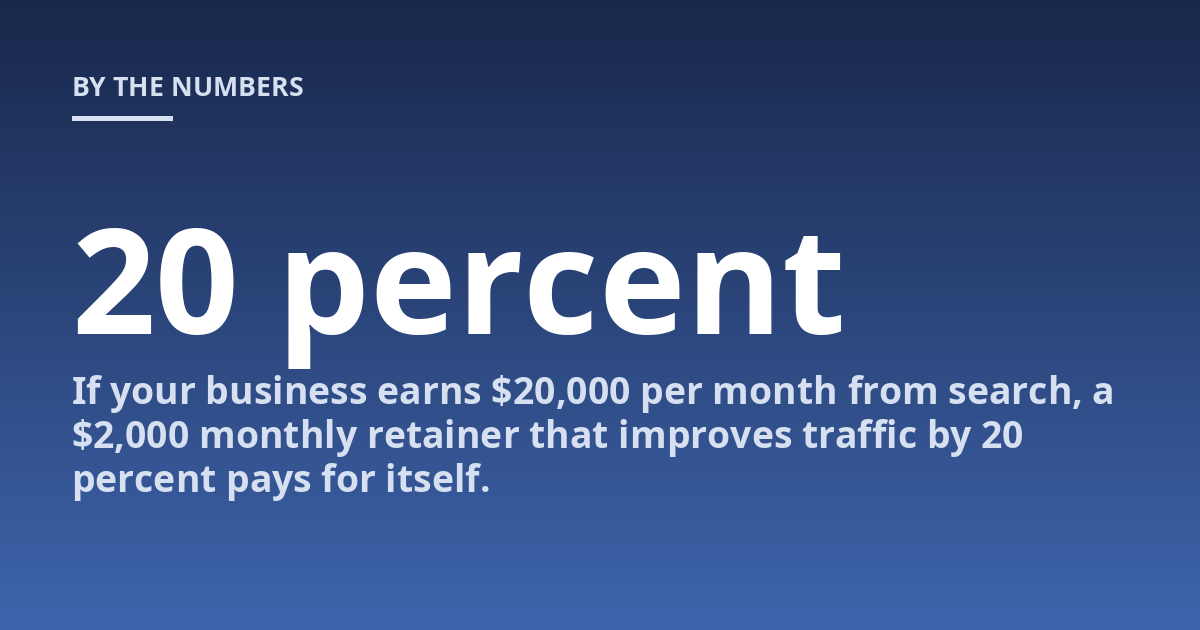
The economics favor an agency when your site’s monthly revenue depends on organic traffic. If your business earns $20,000 per month from search, a $2,000 monthly retainer that improves traffic by 20 percent pays for itself. The same math does not hold if your traffic is negligible. Worth noting: agencies also handle areas like Google’s structured data guidelines, which now directly influence whether your content appears in AI Overviews. Getting schema markup right yourself requires reading specification pages that run dozens of pages. Most people skip it. An agency does not.
Based on direct campaign experience across fifty-plus projects, the single biggest mistake businesses make is trying to do technical SEO themselves for six months, losing rankings, and then hiring an agency to undo the damage. If your site already has a traffic baseline above 5,000 organic visits per month, hire an agency from the start. The cost of recovery is usually higher than the cost of prevention.
Can a Hybrid Model Work?
Yes. In fact, it is usually the most practical arrangement. You keep content creation in-house because nobody understands your customers like you do. You write the blog posts, case studies, and product pages. The agency handles the technical layer: audits, schema implementation, competitor analysis, link-building strategy, and monthly performance reporting. The agency also keeps an eye on changes in Google’s core ranking system and adjusts your roadmap accordingly.
This split works because content and technical SEO require very different skill sets. Writing a helpful article about your product is something your marketing team can do well. Debugging a JavaScript rendering issue that prevents Googlebot from seeing your navigation is not. In practice, the hybrid model reduces the agency’s monthly cost while still giving you access to deep technical strategy. You should be transparent about the split in the initial call. A reputable agency will welcome the clarity.
Let us be honest about one thing: the hybrid model fails when neither side takes ownership. The agency blames content quality. The internal team blames the agency’s technical recommendations. To make it work, define who owns each deliverable before the first month begins. Use a shared tracking sheet. Set a weekly 15-minute check-in.
The AI Search Factor: What Has Changed
AI-era search has made the question “can I do SEO myself or do I need an agency” more urgent. Google’s AI Overviews pull answers directly from authoritative sources and display them above the traditional list of links. and Perplexity now generate answers by citing specific pages. These new surfaces do not reward the same signals that traditional blue-link SEO did. They reward clear answer formatting, factual accuracy, structured data, and entity authority.
An agency that specializes in GEO, or Generative Engine Optimization, understands how to write content that an AI engine finds quotable. They know how to mark up FAQ sections with FAQPage schema, how to create entity-rich author bylines, and how to structure a page so that Google’s AI cites it rather than a competitor’s. A 2024 analysis by BrightEdge found that AI Overviews cite pages with clear headings and lists more often than those with wall-of-text formatting. This is not guesswork. It is pattern recognition that comes from working across dozens of verticals.
You can learn these patterns yourself. The material is public. But the time cost is high. And while you learn, your competitors who hired an agency already have their pages appearing in answers. Counterintuitively, the fastest path here is often the most measured one: pay for the expertise, then shift knowledge to your internal team over time.
How to Evaluate Whether You Need an Agency Right Now
Answer these four questions honestly. They will tell you what to do next.
| Question | DIY path | Agency path |
|---|---|---|
| How much organic traffic do you currently get? | Less than 1,000 visits per month | More than 5,000 visits per month, or a clear path to that level within 12 months |
| What is your technical comfort level? | You can edit HTML and read a crawl report | You do not know what a crawl report is, or you have no time to act on one |
| How fast do you need results? | You can wait 6-12 months for gradual growth | You need measurable movement within 4-6 months |
| What is the competitive density of your keywords? | Most of your target terms have low search volume and few competitors | Your main terms are targeted by national brands or major media sites |
The table oversimplifies, but it captures the general threshold. If you scored mostly “DIY path” answers, start with the free tools. Set up Google Search Console and learn to read its reports. Track your performance in GA4. Write one good article per week targeting a question your customers actually ask. That alone will give you a foundation. If you scored mostly “agency path” answers, save yourself the frustration and book a discovery call with an SEO partner who understands both classic search and AI-era optimization.
What Mistakes Should You Avoid With Unlocking AI-Powered SEO?
The most common mistake is treating AI-powered SEO as a separate thing from normal SEO. It is not. AI search optimization is an extension of the same fundamentals: clear content, good structure, authoritative citations, and fast pages. The mistake is ignoring the new surfaces entirely. Businesses that still write only for the blue link list are losing visibility to competitors who write concise answers that AI engines can quote. Another mistake is expecting immediate results from any SEO effort, whether DIY or agency. Even the best AI-friendly strategy takes three to six months to show measurable impact. Patience is not a virtue in SEO. It is a requirement.
FAQ
What is important to know about choosing between DIY SEO and hiring an agency?
The key points are your traffic level, technical skill, timeline, and competitive density. A precise recommendation depends on examining your current site performance and your business goals. If your site is new and the market is uncrowded, DIY can work. If you need to grow established traffic in a competitive niche, an agency is usually the faster and more reliable path. No single answer fits every situation.
When should I discuss the DIY versus agency question with an SEO professional?
A consultation is useful when you see plateaus, traffic drops, or competitor gains you cannot explain. It is also wise before making major site changes like a redesign or migration, where mistakes can cost months of rankings. Early assessment can prevent small issues from compounding. Many agencies offer a free or low-cost initial audit. Use it to get a data-driven view of what your site needs.
How should I prepare for a consultation about my SEO strategy?
Note your current traffic numbers, your top five target keywords, any recent site changes, and your budget and timeline. Existing data from Google Search Console and Google Analytics helps the consultant understand your starting point. Be specific about what success looks like for you. If you want to sell 20 more products per month from organic traffic, say that. A vague goal leads to a vague plan.
What risks or limits come with DIY SEO?
Risks include technical errors that hurt rankings, slow progress due to limited time, and missing major algorithm updates until after your traffic drops. The limits depend on your site’s complexity and your personal bandwidth. A professional should explain the trade-offs between speed, cost, and quality before you commit to a path. Realistic expectations matter. SEO is not a set-and-forget channel, whether you do it yourself or hire an agency.
How do I know if an agency is good at AI-era SEO?
How do I know if an agency is good at AI-era SEO?
Ask them to show you concrete examples of content appearing in AI Overviews or being cited by Perplexity. A good agency will have case studies or client screenshots that demonstrate this. Ask them what schema types they prioritize for AI visibility. They should mention FAQPage, HowTo, Article, and Organization schemas without hesitation. Ask how they track AI search performance. If they only report on keyword ranking positions in traditional search results, they have not adapted. A competent agency tracks visibility across answers, featured snippets, and knowledge panels.
You should also ask about their process for content formatting. Agencies that understand AI-era SEO insist on clear question-and-answer structures, bullet points, and concise definitions within the first 100 words of a page. They know that AI engines prefer extractable answers over narrative flow. If an agency talks only about backlinks and domain authority without mentioning entity optimization or structured content, keep looking.
How do I align DIY SEO with an agency’s work if I start in-house and hire later?
The best strategy is to build a clean, well-structured site now so that an agency can step in without fixing foundational problems. Use proper heading hierarchy (one H1 per page, logical H2s and H3s). Avoid duplicate content. Keep your URL structure simple and descriptive. Set up Google Search Console and Google Analytics properly from day one. Document everything you do, including keyword targets, content published, and any technical changes made. When you eventually hire an agency, that documentation saves weeks of discovery time and reduces the cost of onboarding.
Another practical step is to run a free technical audit using a tool like Sitebulb or Google’s PageSpeed Insights every quarter. Fix the issues you can. For the ones you cannot, take screenshots and notes. Hand those to the agency as part of your initial brief. Agencies appreciate clients who have done the homework. It tells them you are serious about the relationship and that your site is not a wreck that needs emergency repairs before actual optimization can begin.
What is the actual cost difference between DIY SEO and hiring an agency for a year?
DIY SEO costs are mostly your time, plus roughly $100 to $200 per month if you invest in tools like Ahrefs or Semrush for keyword research and competitor analysis. You may also spend on content writers if you outsource blogging. Over 12 months, that totals around $1,200 to $2,400 for tools plus whatever you value your own time at. If you spend 10 hours per month on SEO and value your time at $100 per hour, that is an additional $12,000 in opportunity cost.
Agency SEO typically ranges from $1,500 to $5,000 per month for a mid-size business, or $18,000 to $60,000 per year. The agency includes tools, reporting, technical work, link building, and strategy in that price. The real cost to compare is not the dollar amount alone. It is the cost of slow or failed SEO. A bad DIY effort that misses technical issues can cost you months of lost traffic. A good agency that moves you from 5,000 to 10,000 monthly visitors in six months may be cheaper in the long run than saving money on DIY that never gets off the ground.
Can I switch from DIY to an agency without losing my existing rankings?
Yes, but the transition requires care. Do not fire your DIY process and immediately replace it with an agency’s approach on the same day. Instead, run both in parallel for one month. Keep publishing your content. Let the agency audit your site and recommend changes. Implement their recommendations gradually. Abrupt changes, especially to site structure, navigation, or URL redirects, can cause temporary ranking drops if not executed properly. A competent agency will manage the transition with a staged rollout and monitor rankings daily for the first two weeks after each change.
The highest risk during a switch is changing your internal link structure or removing pages that have backlinks. Let the agency do a full backlink audit before you touch anything. Some pages that seem weak to you may have accumulated valuable external links. Removing them without redirects can hurt your domain authority. Patience during the handoff period pays off in stable or improved rankings.
Conclusion: The Decision Framework That Works
The question “can I do SEO myself or do I need an agency” does not have a single correct answer that applies to every business. What works is a honest assessment of three variables: your current traffic level, the technical complexity of your site, and the competitive pressure of your target keywords. If all three are low, start with DIY and build a foundation. If any one of them is high, hire an agency or at minimum a specialist consultant before you invest months in effort that may not move your business forward.
The hybrid model offers the best balance for most growing companies. You handle the content that only you can write. The agency handles the technical and strategic work that requires depth and experience. That split respects both your unique expertise and the reality that SEO has become a multidisciplinary field involving coding, data analysis, user experience, and content strategy. No single person can master all four while also running a business.
If you are still unsure, take the table in this article and score your situation. Be honest about your answers. If you land in the agency column for even two of the four questions, book a call with a qualified SEO partner. The cost of a consultation is small compared to the revenue you lose from invisible search presence. Start with a clear-eyed view of where you are, and the path forward will reveal itself.
Other posts from the category
There are no posts for the selected category.

Latest posts from the category
-

What makes an effective Category Page for AI
June 5, 2026
-

What Influences the cost of AI Optimisation
June 1, 2026
-

Organisation Schema: how to help AI understand your brand
May 27, 2026