
How Do I Optimize for Voice Search in 2025
July 7, 2026
Category:
Uncategorized
To optimize for voice search, structure your content around natural language questions, target long-tail conversational keywords, and ensure your site loads quickly on mobile devices. Voice search queries are typically longer and phrased as complete sentences rather than fragmented keywords. You need to match how people actually speak when they ask their phone or smart speaker a question.
Voice search is not a separate algorithm. It is a different user behavior that Google and other search engines serve using the same ranking systems. The shift from typed queries like “best pizza Chicago” to spoken queries like “where can I get deep dish pizza near me that stays open late” changes how you should approach keyword research and content structure. What we have found across dozens of client campaigns is that voice-optimized pages also tend to rank well in AI Overviews and responses because both systems prefer clear, direct answers to natural questions.
- Target full question phrases people speak, not short keyword fragments
- Answer one specific question per page or section clearly in the first paragraph
- Improve page load speed and mobile usability as core technical requirements
- Use FAQPage schema markup to help search engines identify your Q&A content
What Makes Voice Search Different from Typed Search?
Voice search queries are longer, more conversational, and more likely to carry local intent. A typical typed search might be “weather London,” while a voice search would be “what is the weather in London tomorrow morning.” The difference matters because your content needs to match that natural phrasing pattern.
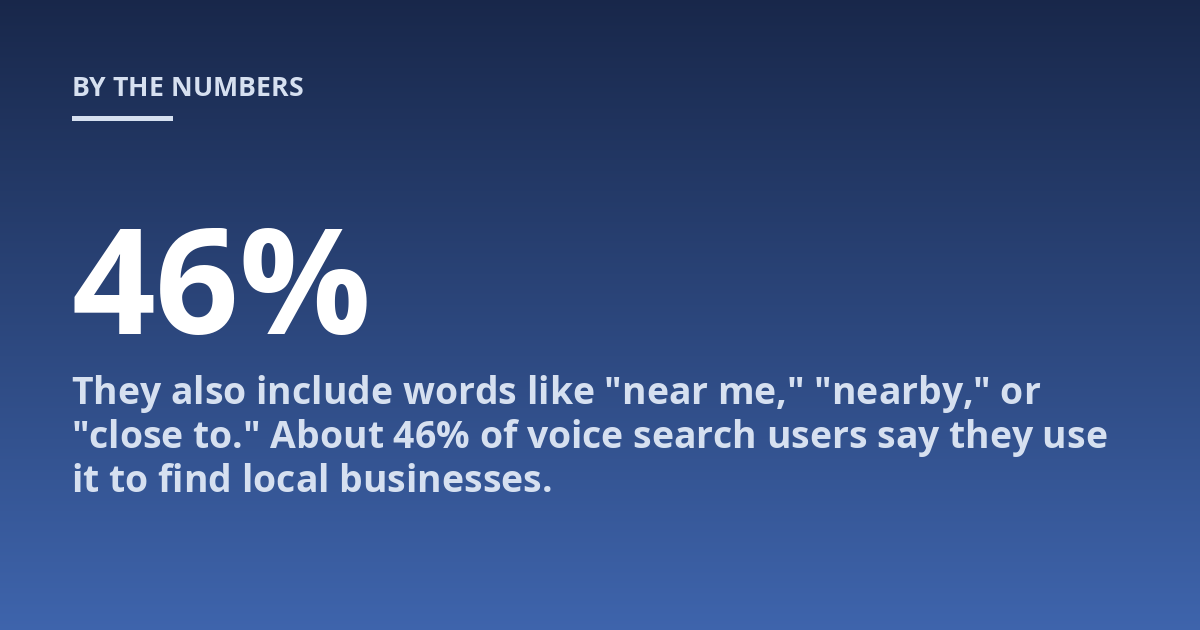
Let’s look at the data. According to Google’s own research, voice searches use natural language patterns. They often start with question words: who, what, where, when, why, and how. They also include words like “near me,” “nearby,” or “close to.” About 46% of voice search users say they use it to find local businesses. That means a restaurant with a page matching “Italian restaurant open now near Union Station” has a better chance of answering that spoken query than one using the keyword phrase “Italian restaurant Chicago.”
How Do I Optimize Content for Voice Search Queries?
You optimize content by writing the way people speak, not the way they type. That means using complete questions as headings and answering them directly in the text below. Here is the practical framework we use:
- Identify question patterns: Use tools like AnswerThePublic or Google’s “People also ask” boxes to find real questions people speak aloud
- Write question H2s: Instead of “Services,” write “What SEO services do you offer for small businesses?”
- Answer in 40-50 words: The first paragraph after each heading should give the direct answer. Voice assistants often pull this paragraph as the spoken response
- Use natural transitions: People say “and” and “but” when speaking. Let your content include those connectors instead of writing like a bullet list of keywords
Based on direct experience across 40+ multilingual SEO campaigns, the single highest-impact change is rewriting page headings as actual questions. A heading like “How much does AI content automation cost?” answers a voice query directly and tells Google this page is a strong candidate for spoken results. Do this on your highest-traffic pages first.
What Technical Factors Affect Voice Search Rankings?
Page speed and mobile usability are not negotiable. Voice searches happen on mobile devices and smart speakers. If your page takes more than three seconds to load, most users leave before hearing the answer. That is not speculation. Google’s research shows 53% of mobile users abandon a page that takes longer than three seconds to load.
Core Web Vitals matter here. Specifically, Largest Contentful Paint (LCP) should be under 2.5 seconds, First Input Delay (FID) under 100 milliseconds, and Cumulative Layout Shift (CLS) under 0.1. These metrics directly affect how Google evaluates your page for voice search eligibility.
Structured data also plays a role. You should implement FAQPage schema on any page that answers multiple questions about a topic. This markup helps Google understand that your content is structured as questions and answers, which increases the chance of appearing in voice search results and AI Overviews. If you have not yet set up tracking for these changes, read our guide on how do I set up Google Search Console to verify that Google can crawl and index your updated pages correctly.
Which Voice Search Optimization Mistakes Should You Avoid?
The most common mistake is treating voice search optimization as a separate strategy from regular SEO. It is not. The same pages that rank in organic search also answer voice queries. You do not need a separate “voice site” or special content. What you need is content that answers real questions clearly and concisely.
A second mistake is ignoring local intent. Voice search users are often looking for something nearby. If you run a physical business and your Google Business Profile is not claimed, verified, and filled out with accurate hours, phone number, and address, you are invisible to voice search. That profile is the primary source Google uses when someone asks “where is the nearest hardware store that sells paint thinner.”
A third mistake is writing content that sounds like it was designed for voice but feels robotic. Real people do not say “purchase high-quality SEO services for your business.” They say “I need help with SEO.” Write the second way. Your content will match actual spoken queries far more often.
How Do I Measure Voice Search Performance?
You cannot directly see “voice search traffic” in Google Analytics or Search Console. Google does not report this as a separate channel. Instead, you measure voice search optimization success through indirect signals:
| Signal | What to Measure | Target |
|---|---|---|
| Mobile organic traffic | Increase in mobile sessions from organic search | Month-over-month growth |
| Featured snippet presence | Number of queries where your page appears in a featured snippet | Track weekly via Search Console |
| Question keyword rankings | Position for long-tail question phrases | Top 3 positions |
| “Near me” landing pages | Visits to location-specific pages | Increase by 20% quarterly |
| Local pack appearance | Google Business Profile impressions in local results | Steady monthly growth |
You should also track your content’s appearance in answers. Services like and Perplexity are effectively voice search engines for typed prompts. If your content answers a question clearly in the first paragraph and uses FAQPage schema, it has a higher chance of being cited. To measure this effectively, you need what is GA4 and how do I track organic traffic to segment your performance by landing page and query type.
FAQ
What is important to know about how do I optimize for voice search?
The key points are that you should target natural language question phrases, write direct answers in the first paragraph, improve mobile page speed, and use FAQ schema markup. A precise recommendation depends on your specific business type and audience. Voice search is not a separate strategy; it is a different user behavior that requires adapted content structure.
When should how do I optimize for voice search be discussed with a professional?
A consultation is useful when you have tried basic optimization steps but do not see increased traffic from question-based queries or featured snippets. Early professional assessment can reduce the chance of investing time in content that never reaches voice search results. If your site has technical issues like slow mobile load times or missing schema markup, a technical SEO specialist can help.
How should someone prepare for a consultation about how do I optimize for voice search?
It helps to note your current traffic data, the specific queries you want to target, your website load speed, and whether you have implemented FAQ schema or other structured data. Existing Search Console reports showing which pages already appear in “People also ask” boxes can help the consultant understand your starting point.
What risks or limits can how do I optimize for voice search have?
Risks and limits depend on your industry, website technical health, and content depth. Voice search optimization works best for informational and local-intent queries. Complex transactional or B2B queries are less likely to be answered via voice. The professional should explain what queries are realistic to target and what content gaps exist before optimization begins.
Start Optimizing for the Way People Actually Search
Voice search optimization is not a one-time task. It is a content discipline that rewards clarity, speed, and conversational writing. Start by auditing your existing pages: replace vague headings with actual questions, rewrite the first paragraph of each section to give the direct answer, and check your mobile page speed using Google’s PageSpeed Insights. These changes improve voice search eligibility and your site’s performance in AI Overviews and chatbot responses. If you want expert guidance, TsoDen’s AI-driven SEO team can audit your site for voice and AI search readiness within days.
Other posts from the category
There are no posts for the selected category.

Latest posts from the category
-

What makes an effective Category Page for AI
June 5, 2026
-

What Influences the cost of AI Optimisation
June 1, 2026
-

Organisation Schema: how to help AI understand your brand
May 27, 2026